

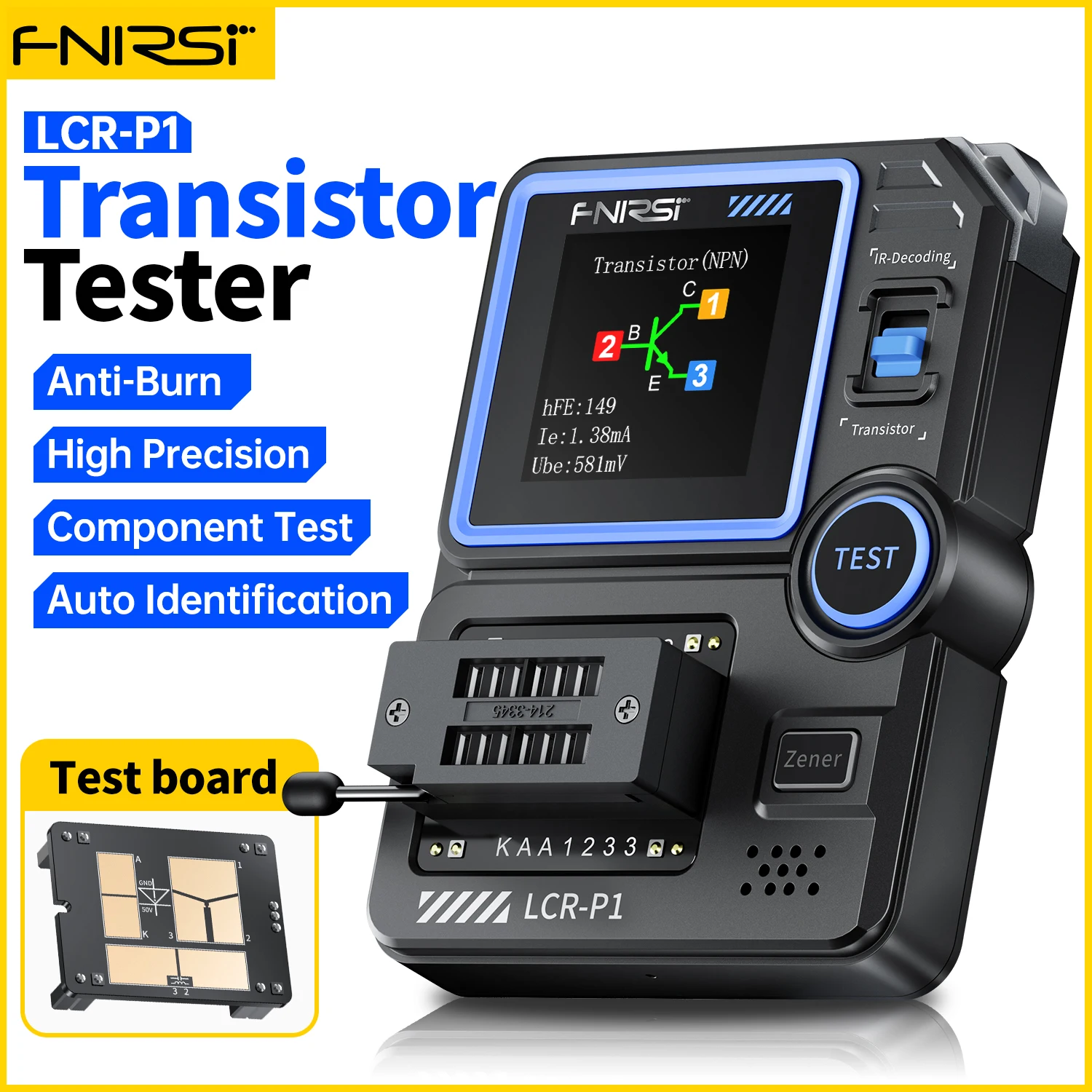




The FNIRSI LCR-P1 is a handheld component tester that automatically identifies and measures electronic parts.
Insert a component and the tester tells you what it is, which pin is which, and its key parameters.
No more guessing at unmarked parts or searching for datasheets to identify pinouts.
What does LCR-P1 It Test?
Semiconductors
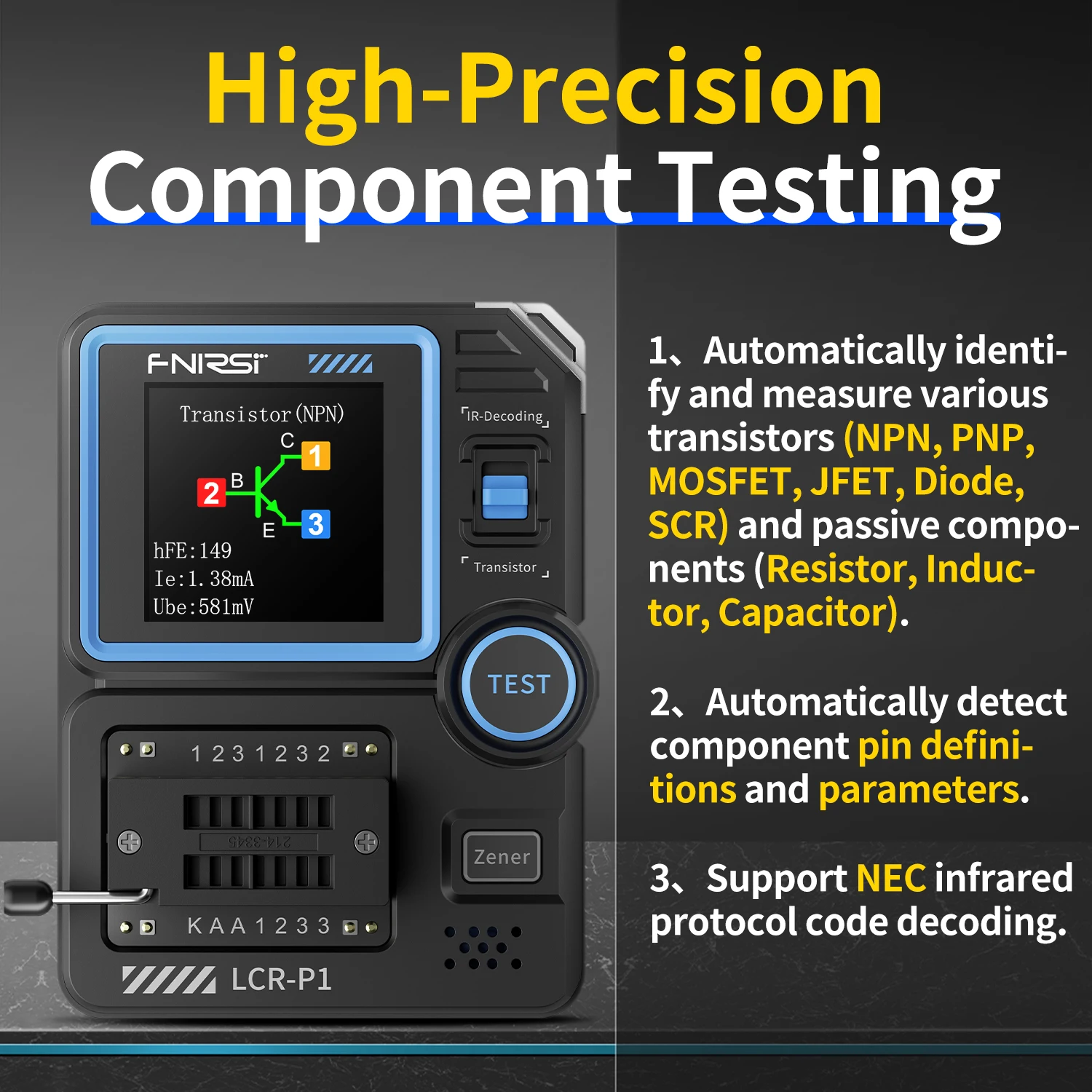
NPN Transistors – identifies type, pinout and measures gain (hFE)
PNP Transistors – identifies type, pinout and measures gain (hFE)
N-Channel MOSFETs – identifies type and shows gate, drain, source pins
P-Channel MOSFETs – identifies type and shows gate, drain, source pins
JFETs – junction field effect transistors
Standard Diodes – shows forward voltage drop
Zener Diodes – shows breakdown voltage
LEDs – identifies and shows forward voltage
Passive Components
Capacitors – measures capacitance value and ESR (equivalent series resistance)
Resistors – measures resistance value
Inductors – measures inductance value
Power Sources
Batteries – checks voltage level
One device handles the components you encounter most often in electronics work.
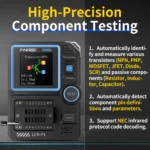
Automatic Identification
Traditional multimeters require you to know what you’re testing before you start.
The LCR-P1 works differently.
Insert any supported component into the test socket.
The tester analyses it automatically and tells you:
- What type of component it is
- Which pin is which (pinout diagram on screen)
- Key electrical parameters
No need to consult datasheets or guess at unmarked parts.
This speeds up sorting, checking and troubleshooting significantly.
Colour Display
The 1.44-inch full-colour screen shows all information clearly.
Component type, pinout diagram and measured values display together on one screen.
No scrolling through menus or switching between views.
Easy to read at a glance, even in varied lighting.
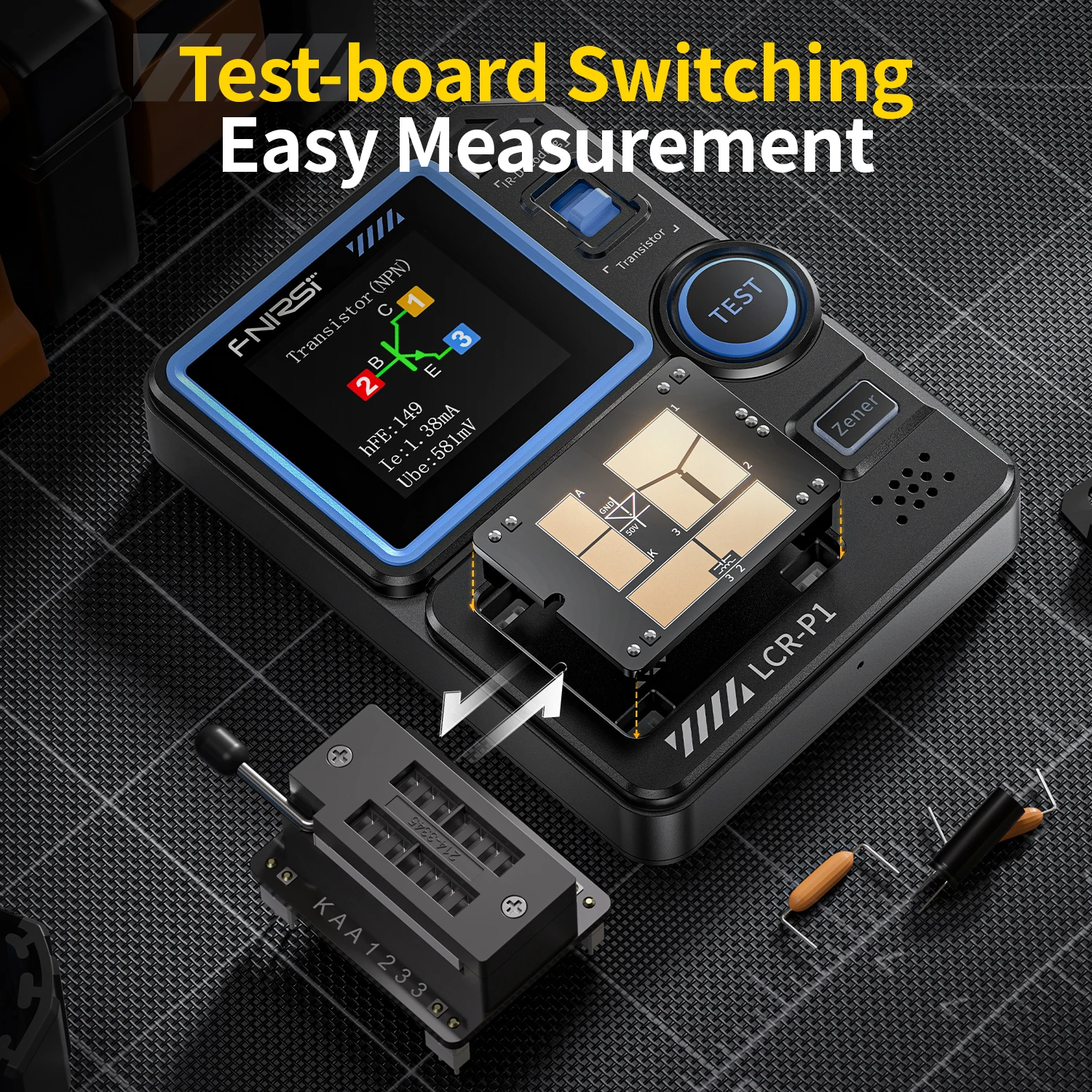
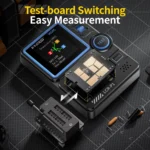
Replaceable Test Socket
The component socket (patch seat) is replaceable.
This design allows you to test a wide range of component sizes:
Small SMD parts – tiny surface mount resistors, capacitors and semiconductors
Standard through-hole components – transistors, diodes and capacitors with wire leads
Larger power devices – MOSFETs and transistors in TO-220 and similar packages
When the socket wears out from repeated use, replace it rather than the whole tester.
Anti-Burn Protection
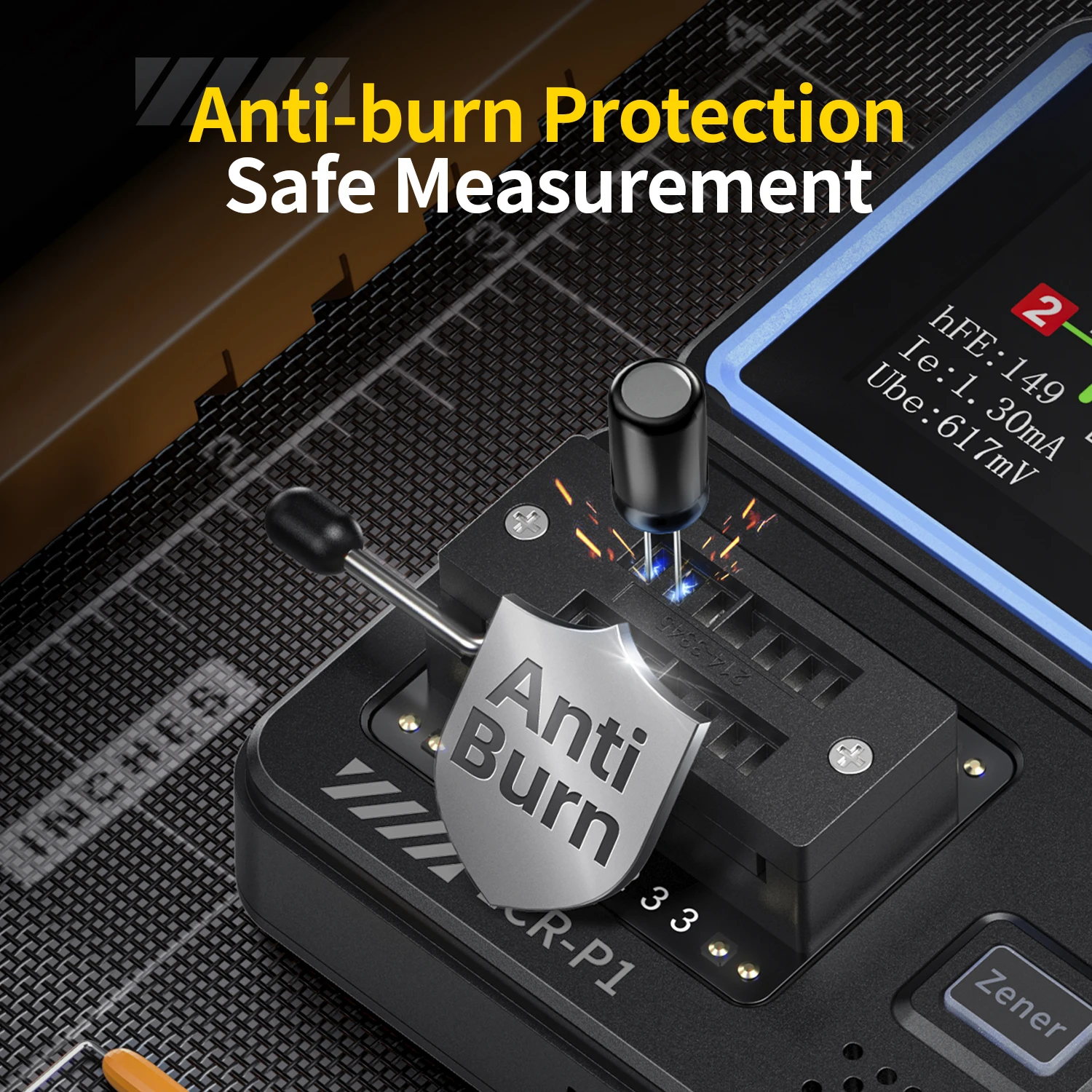
Capacitors can hold charge even after circuits are powered off.
Inserting a charged capacitor into a tester can damage the device.
The LCR-P1 includes automatic protection against this.
When you insert a capacitor, the tester checks for residual charge.
If charge is detected, it discharges the capacitor safely before testing.
This protects the tester and gives you peace of mind when working with components from power circuits.
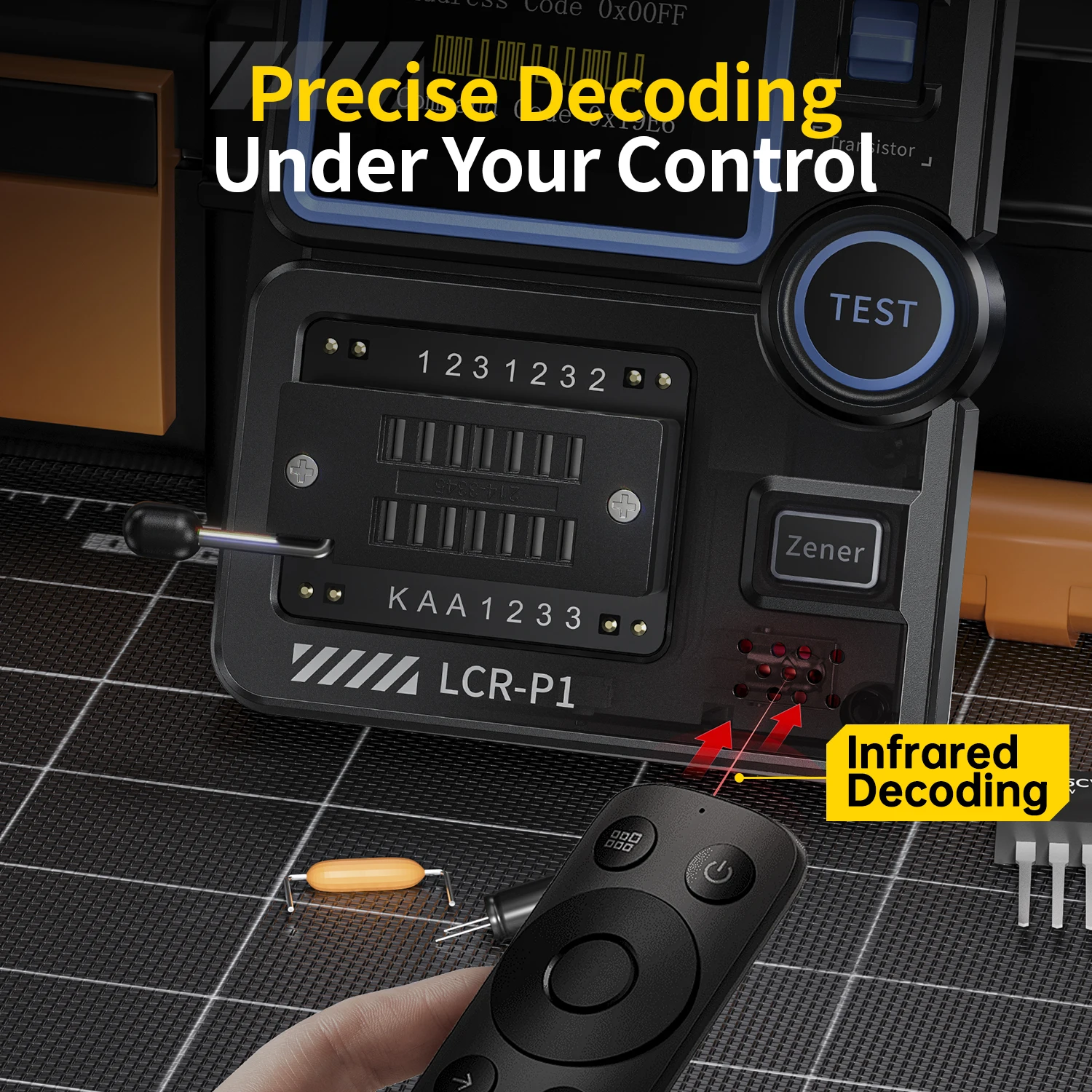
Infrared Protocol Decoding
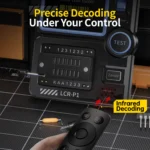
The LCR-P1 includes an infrared receiver for NEC protocol decoding.
Point a remote control at the tester and press a button.
The tester displays the decoded signal data.
Useful for:
- Debugging custom remote control projects
- Identifying which codes a remote sends
- Repairing or replacing remote control equipment
- Learning how infrared communication works
A handy extra feature beyond basic component testing.
Portable and Rechargeable
Built-in 300mAh lithium battery.
Charges via USB Type-C.
No need for disposable batteries.
Compact size fits easily in your pocket, toolkit or component drawer.
Take it to the workbench, the repair site, the makerspace or the classroom.
Always ready when you need to identify a component quickly.
Firmware Updates
The USB Type-C connection supports firmware upgrades.
Download updates to keep the tester current with improvements and fixes.
Your device stays useful for longer.
Who Is This For?
Electronics hobbyists identifying unknown components from project bins or salvaged boards.
Repair technicians checking transistors, capacitors and other parts removed during fault-finding.
Students learning about component types, pinouts and electrical parameters.
Makers sorting components for Arduino, Raspberry Pi and DIY electronics projects.
Educators demonstrating component identification in classroom settings.
Anyone who works with loose components and needs quick, reliable identification.
Practical Uses
Component Identification
Find unmarked transistors in your parts drawer and identify whether they’re NPN, PNP or MOSFET.
Determine pinouts without searching datasheets.
Check if a transistor is good or faulty.
Capacitor Testing
Measure capacitance to verify values before use.
Check ESR to identify ageing or failing electrolytic capacitors.
Useful for vintage equipment repair where old capacitors often need replacement.
Resistor and Inductor Verification
Confirm resistor values when colour bands are hard to read or components are unmarked.
Measure inductors for RF and filter circuit work.
Sorting and Organisation
Work through mixed component bins quickly.
Identify and sort salvaged parts from old equipment.
Build organised component storage with confidence in what you have.
Zener Diode Testing
Identify Zener diodes and measure their breakdown voltage.
Essential when the marking is worn or missing.
Remote Control Debugging
Decode infrared signals from remote controls.
Verify remotes are transmitting correctly.
Capture codes for custom electronics projects.
Battery Checking
Quick voltage check for loose cells.
Useful for sorting rechargeable batteries or testing coin cells.
What’s in the Box
- FNIRSI LCR-P1 component tester
- USB Type-C charging cable
- User manual
Fast UK Delivery
Orders ship from our UK warehouse within 1-2 business days.
No long waits. No customs delays.
60-day returns and 12-month guarantee.
Reviews
There are no reviews yet.