

Communication Boards
Communication boards add wireless and wired connectivity to Arduino, ESP32, and Raspberry Pi projects. Kunkune stocks Bluetooth modules (HC-05, HC-06), GPS modules (NEO-6M, NEO-M8N), GSM/GPRS modules (SIM800L), 2.4GHz radio (NRF24L01), 433MHz long-range radio (HC-12), RS485 serial modules, and USB-TTL converters. Prices from £0.69.
Showing 1–15 of 27 resultsSorted by price: high to low
-
Price range: £7.90 through £9.90Select options This product has multiple variants. The options may be chosen on the product page
-
-
-
-
-
-
-
-
-
Original price was: £4.90.£3.90Current price is: £3.90.Select options This product has multiple variants. The options may be chosen on the product page
-
Original price was: £4.90.£3.90Current price is: £3.90.Select options This product has multiple variants. The options may be chosen on the product page
-
Original price was: £5.90.£3.90Current price is: £3.90.Select options This product has multiple variants. The options may be chosen on the product page
Showing 1–15 of 27 resultsSorted by price: high to low
What Types of Communication Modules Work with Arduino?
Communication modules add wireless or wired data transfer to Arduino, ESP32, and Raspberry Pi projects. Each module type uses a different protocol and frequency for a specific purpose.
| Module Type | Models at Kunkune | Range | Best For | Price From |
|---|---|---|---|---|
| Bluetooth | HC-05, HC-06 | 10 m | Phone-to-Arduino, wireless serial | £3.90 |
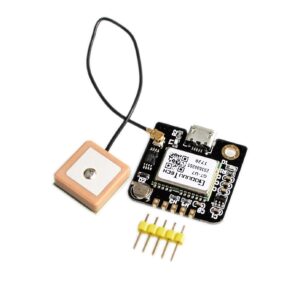
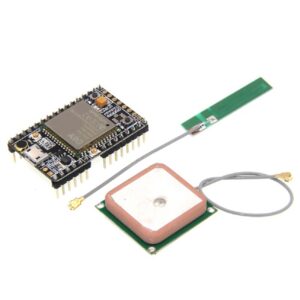
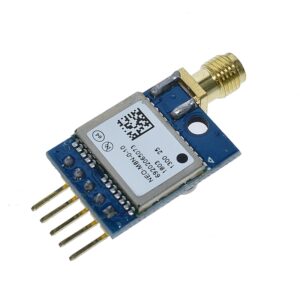
| GPS | GY-NEO6MV2, NEO-M8N, GT-U7, A9G | Satellite | Vehicle tracking, navigation, logging | £4.90 |
| GSM/GPRS | SIM800L, SIM800C, A9G | Cellular network | SMS alerts, IoT data over mobile, GPS tracking | £4.90 |
| 2.4GHz Radio | NRF24L01, NRF24L01+PA+LNA | 100 m – 1 km | Sensor networks, remote controls, drones | £1.45 |
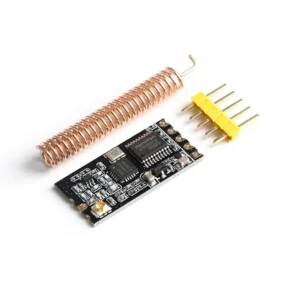
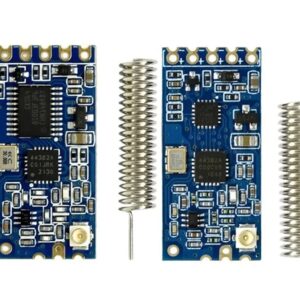
| 433MHz Radio | HC-12 | Up to 1 km | Long-range serial, low-power remote sensing | £3.90 |
| RS485 Serial | MAX485, RS485 Isolated | Up to 1.2 km wired | Industrial serial, multi-device bus, long cable runs | £0.69 |
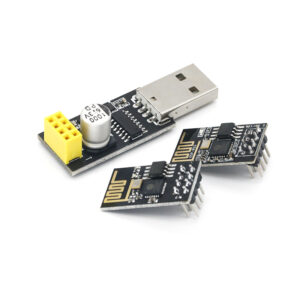
| WiFi | ESP-01S | WiFi network range | Adding WiFi to Arduino boards | £2.45 |
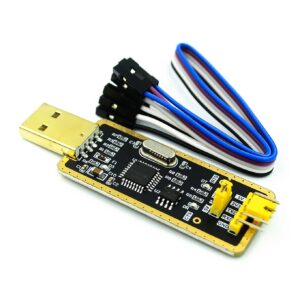
| USB-TTL Converter | FT232RL, CP2102, PL2303 | USB cable length | Programming boards, serial debugging | £2.20 |
All communication modules work with Arduino Uno, Nano, Mega, ESP32, and Raspberry Pi boards. Most connect through UART serial (TX/RX pins) or SPI.
Which Bluetooth Module Should I Use with Arduino?
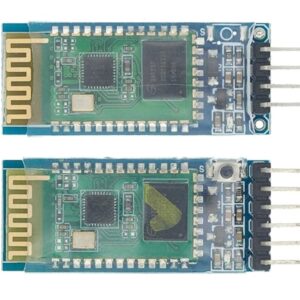
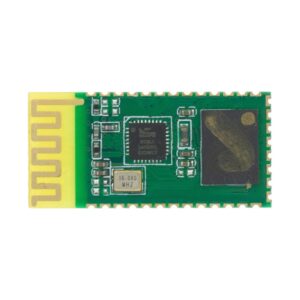
The HC-05 and HC-06 are the most popular Bluetooth modules for Arduino projects. Both use classic Bluetooth (not BLE) and communicate over a serial UART connection at 9600 baud by default.
The HC-06 works as a slave device only. It waits for a phone or computer to connect to it. This is the simpler option for projects where you control Arduino from a phone app.
The HC-05 works as both master and slave. It can initiate connections to other Bluetooth devices. Use the HC-05 when you need two Arduinos to talk to each other wirelessly or when you need to connect to a specific Bluetooth device automatically.
Both modules connect to Arduino with 4 wires: VCC (5V), GND, TX, and RX. Use the SoftwareSerial library to avoid conflicts with the Arduino’s main serial port.
If you need Bluetooth Low Energy (BLE) instead of classic Bluetooth, use an ESP32 board which has BLE built in.
Which GPS Module Is Best for Arduino?
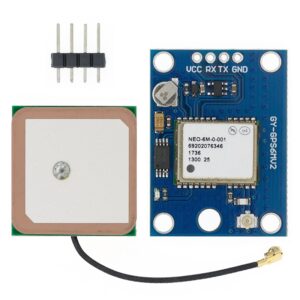
The GY-NEO6MV2 is the best GPS module for Arduino beginners. It uses the u-blox NEO-6M chip, includes a ceramic antenna, and connects over UART serial. It outputs NMEA data that the TinyGPS++ library parses into latitude, longitude, altitude, speed, and time.
The NEO-M8N is a newer, more accurate GPS module. It acquires satellites faster and maintains a fix in weaker signal conditions. Choose this for vehicle tracking and projects that need better accuracy.
The GT-U7 is a USB GPS module that connects directly to a computer. It works with GPS software on Windows, Mac, and Linux without a microcontroller.
The A9G combines GPS and GSM/GPRS on a single board. It sends GPS coordinates over the mobile network via SMS or data. This is ideal for standalone GPS trackers that report their position remotely.
What Is the NRF24L01 and What Is It Used For?
The NRF24L01 is a 2.4GHz wireless radio transceiver module. It sends and receives data between two or more Arduino boards without WiFi or Bluetooth. The standard module has a range of about 100 metres in open air. The NRF24L01+PA+LNA version with an external antenna reaches up to 1 km.
The NRF24L01 connects to Arduino over SPI (pins MOSI, MISO, SCK, CSN, CE). The RF24 library handles all communication. It supports up to 6 simultaneous data pipes, so one receiver can collect data from multiple senders.
Common uses include wireless sensor networks, remote controls, drone telemetry, weather station data links, and home automation where WiFi is not available or not needed. The module draws very little power, making it suitable for battery-powered sensor nodes.
For a board with NRF24L01 built in, see the RF Nano in our Arduino boards range.
How Do I Send SMS with Arduino?
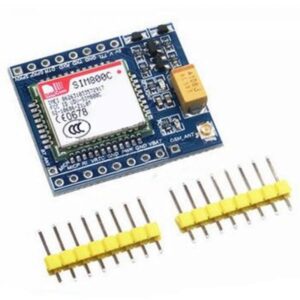
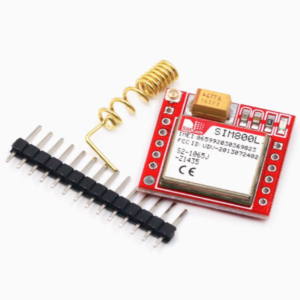
The SIM800L GSM/GPRS module lets Arduino send and receive SMS messages, make phone calls, and transmit data over the mobile network. It requires a standard SIM card with an active plan and an external antenna.
The SIM800L runs on 3.7V–4.2V and draws up to 2A in burst during transmission. It needs a dedicated power supply — the Arduino’s 5V pin cannot provide enough current. A LiPo battery or a buck converter from a 5V supply works well.
The SIM800C variant adds Bluetooth and text-to-speech (TTS) capability. The A9G adds GPS positioning alongside GSM, combining tracking and communication in one module.
Use AT commands over UART serial to control the module. Libraries like TinyGSM simplify the process for Arduino and ESP32 projects. Common applications include SMS alerts for security systems, remote sensor data reporting, and GPS vehicle trackers.
Do Communication Boards Work with ESP32?
Yes. Every communication module in the Kunkune range works with ESP32, ESP8266, and Raspberry Pi as well as Arduino. The UART, SPI, and I2C connections are the same across all platforms.
ESP32 already has WiFi and Bluetooth built in. You would add a communication board to ESP32 when you need a feature it does not have: GPS positioning (NEO-6M, NEO-M8N), cellular connectivity (SIM800L), long-range radio (NRF24L01, HC-12), or RS485 industrial serial (MAX485).
ESP32 runs at 3.3V logic. Most communication modules in our range accept both 3.3V and 5V. Check the module’s operating voltage on the product page before connecting. For 5V-only modules, use a logic level converter.
For ESP32 boards, browse our ESP32 and ESP8266 range. To pair communication modules with sensors, see our sensor range. For Arduino boards, see our Arduino-compatible boards.