

Arduino Sensors
Arduino sensors detect temperature, motion, light, sound, humidity, distance, and pressure. They work with Arduino Uno, Nano, Mega, ESP32, ESP8266, and Raspberry Pi boards. Kunkune stocks 66+ affordable sensor modules from £0.99 with no minimum order. Buy individual sensors or save with the 37-in-1 sensor kit. Same-day UK dispatch, 12-month guarantee, 60-day returns.
Showing 1–15 of 67 resultsSorted by price: high to low
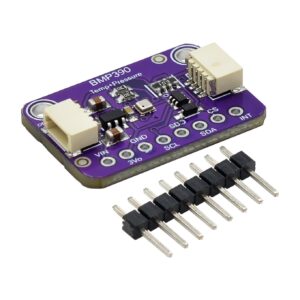
- Price range: £2.90 through £4.90Select options This product has multiple variants. The options may be chosen on the product page
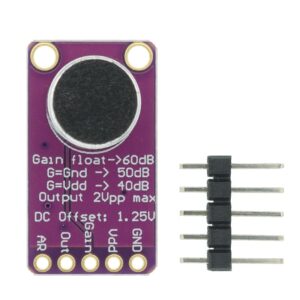
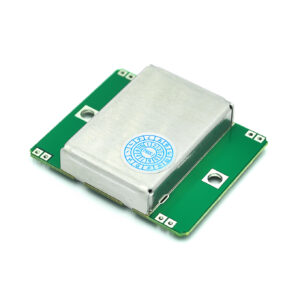
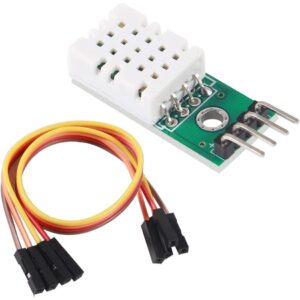
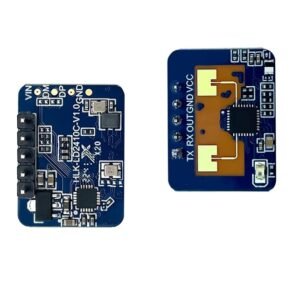
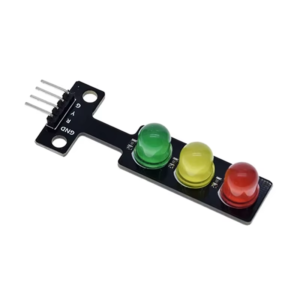
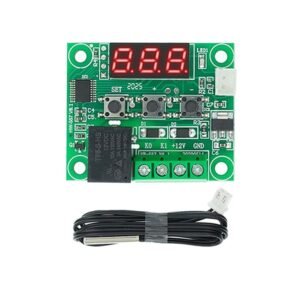
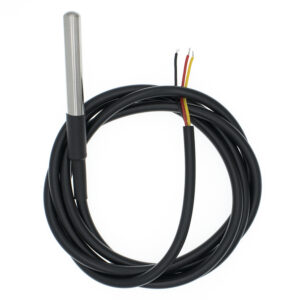
Showing 1–15 of 67 resultsSorted by price: high to low
What Are Arduino Sensors and What Do They Measure?
Arduino sensors are electronic modules that detect physical changes and send data to a microcontroller board. Each sensor module converts a real-world stimulus into an electrical signal that Arduino, ESP32, or Raspberry Pi can read and act on.
Sensors connect through digital pins or analog pins. Digital sensors like the DS18B20 and DHT22 send data using protocols like 1-Wire or I2C. Analog sensors like the LDR light sensor and LM35 temperature sensor output a voltage that changes with the measurement. The Arduino IDE reads both types using free libraries.
Kunkune stocks 66+ sensor modules covering every common measurement type. All sensors work with Arduino Uno, Nano, Mega, ESP32, ESP8266, and Raspberry Pi boards. Prices start from £0.99 per module with no minimum order.
What Types of Sensor Modules Are Available?
Arduino sensor modules are grouped by what they measure. The table below lists every sensor type Kunkune stocks, with popular models and typical project uses.
| Sensor Type | Popular Models | Measures | Price From | Common Projects |
|---|---|---|---|---|
| Temperature | DS18B20, DHT11, DHT22, BMP280, LM35 | -55°C to +125°C | £1.19 | Weather stations, greenhouses, aquariums |
| Humidity | DHT11, DHT22, AHT10, HDC1080 | 20% to 99% RH | £1.19 | Climate control, plant monitoring |
| Motion | HC-SR501 PIR, MPU6050 accelerometer | Movement, tilt, orientation | £1.29 | Security systems, robotics, smart lighting |
| Distance | HC-SR04 ultrasonic, VL53L0X laser | 2 cm to 400 cm | £1.45 | Parking sensors, robots, object detection |
| Light | LDR photoresistor, BH1750, LM393 | Light intensity in lux | £0.99 | Auto lighting, solar trackers, light meters |
| Pressure | BMP280, BMP180 | 300 to 1100 hPa | £1.49 | Weather stations, altitude measurement |
| Sound | KY-038 microphone, MAX4466 | Sound level and detection | £0.99 | Clap switches, noise monitors |
| Infrared | TCRT5000, IR receiver, flame sensor | IR reflection, remote signals, fire | £0.99 | Line-following robots, remote control, safety |
| Gas | MQ-2, MQ-135, MQ-7 | Smoke, CO, air quality | £1.49 | Air quality monitors, gas leak detectors |
The most popular light sensor for Arduino is the LM393 photosensitive module. It outputs a digital HIGH or LOW signal when light crosses a set threshold. For precise lux readings, the BH1750 digital light sensor uses I2C and gives exact values from 1 to 65535 lux.
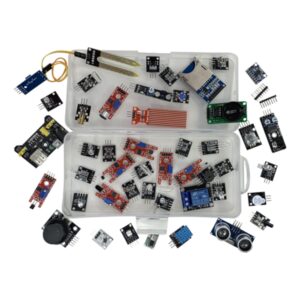
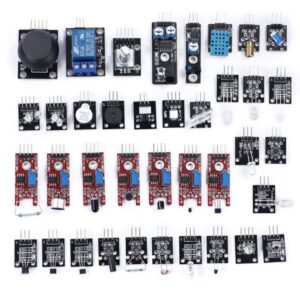
For a complete list of Arduino sensors in one package, the 37-in-1 Sensor Kit includes temperature, humidity, motion, sound, light, infrared, touch, flame, and joystick modules for £13.90.
What Are the Best Sensors for Arduino Beginners?
The best sensors for Arduino beginners are the DHT11, HC-SR04, and HC-SR501. Each one is cheap, easy to wire, and has hundreds of free tutorials online.
The DHT11 temperature and humidity sensor uses a single digital pin, runs on 3.3V or 5V, and costs £1.19. The DHT library in Arduino IDE handles all the communication. Upgrade to the DHT22 for better accuracy (±0.5°C vs ±2°C) and a wider measurement range.
The HC-SR04 ultrasonic distance sensor measures from 2 cm to 400 cm using sound waves. It needs 4 wires: VCC, GND, Trigger, and Echo. The NewPing library handles the timing calculations. This is the most popular Arduino distance sensor for beginners.
The HC-SR501 PIR motion sensor is the simplest to wire. It needs only 3 pins and outputs HIGH when movement is detected. Most beginner security and smart lighting projects start here.
All three are included in Kunkune’s Arduino starter kits. You can also buy each one individually from £0.99.
Are Arduino Sensors Compatible with ESP32 and Raspberry Pi?
Yes. Every sensor module in the Kunkune range works with Arduino, ESP32, ESP8266, and Raspberry Pi boards. The pin connections are the same. The libraries are the same. The only difference is the operating voltage.
Arduino Uno and Nano run at 5V logic. ESP32 and ESP8266 run at 3.3V logic. Most sensors in our range accept both voltages. For 5V-only sensors on a 3.3V board, a logic level converter is needed.
Using sensors with an ESP32 board adds WiFi and Bluetooth to your project. This lets you read sensor data remotely through a phone, a web dashboard, or home automation software like Home Assistant. Raspberry Pi sensors use the same I2C and SPI protocols, so modules like BMP280 and DHT22 connect identically.
For a detailed comparison between Arduino and other platforms, read our microcontroller comparison guide.
How Much Do Arduino Sensors Cost?
Arduino sensor modules at Kunkune start from £0.99 for basic sensors like the LDR light module and sound detection module. Most popular sensors including the DHT11, HC-SR04, and BMP280 cost between £1.19 and £1.49 each.
Buying a sensor kit is cheaper than buying individual modules. The 37-in-1 Sensor Kit costs £13.90 for 37 different sensor modules. Buying the same sensors individually would cost over £40. This is the best value option for beginners and students building multiple projects.
Kunkune offers some of the lowest sensor prices from any UK-based supplier. All sensors are dispatched within 1 working day with delivery in 1–2 days. Free shipping on orders over £25. No minimum order means you can buy a single £0.99 sensor and nothing else.
For a full comparison of UK electronics suppliers by price and shipping, read our UK buying guide.
What Can I Build with Arduino Sensors?
Arduino sensors are the starting point for almost every electronics project. The sensor you choose depends on what you want to measure and control.
Environmental monitoring station — Combine a BMP280 pressure sensor, DHT22 temperature and humidity sensor, and an OLED display to read local atmospheric data. Add an ESP32 board to log data wirelessly. See our weather station build guide.
Automatic plant watering — A soil moisture sensor detects dry soil. The Arduino activates a relay module to turn on a water pump automatically. See our plant watering project guide.
Smart home security — HC-SR501 PIR motion sensors detect movement. The Arduino triggers a buzzer, sends a notification through an ESP32 WiFi board, or switches on lights through a relay.
Air quality monitor — MQ-135 gas sensors measure CO2, ammonia, and benzene levels. Pair with a DHT22 for temperature and humidity. Display readings on an LCD or send them to a dashboard.
Line-following robot — TCRT5000 infrared sensors detect a black line on a white surface. Two sensors and two motors create a basic autonomous robot.
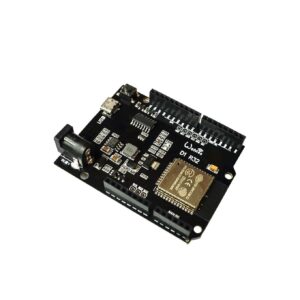
For more ideas, see our 10 best Arduino project ideas for beginners. If you do not have a board yet, start with a starter kit or choose a board from our Arduino-compatible boards range from £2.90.