

Weller vs Hakko vs YIHUA: Soldering Station Showdown From Someone Who’s Killed Too Many PCBs
Alright, let’s talk soldering stations. I’ve been lurking on r/electronics and watching Core Electronics tutorials for years, and the same question pops up every single week: “Should I get a Hakko or Weller? What about those cheap Chinese stations?“
Here’s my honest take after burning through three budget irons, destroying more PCBs than I’d like to admit, and finally figuring out what actually matters. Spoiler: it’s probably not what the YouTube reviewers are telling you. There are many great tutorials regarding soldering out there, but most don’t give you the real story on value.
I’m going to break down the Hakko FX-888D vs Weller WE1010 debate — picture the playful Japanese Hakko in one corner vs the sophisticated German Weller in the other. And I’ll throw in YIHUA because honestly? For most of us hobbyists, they’re the real answer nobody wants to admit.
Hakko FX-888D vs Weller vs YIHUA 939 EVO : Quick Comparison
For the impatient (I get it), here’s the cheat sheet comparing two such great soldering stations plus the budget champion:
| Station | Price | Power | Temp Range | Best For |
|---|---|---|---|---|
| Hakko FX-888D | £140-180 | 70W | 200-480°C | “Buy it for life” crowd |
| Weller WE1010 | £150-190 | 70W | 100-450°C | Feature lovers, nice LCD |
| YIHUA 939D+ III EVO | £69.50 | 75W | 200-480°C | 90% of hobbyists (best value) |
Hot take: The YIHUA 939D+ III EVO at £69.50 gives you 90% of the Hakko’s performance at less than half the price. The FX-888D and the Weller are both excellent products, but for weekend warriors? YIHUA is the smart choice. Fight me in the comments.
→ View YIHUA 939D+ III EVO at Kunkune (£69.50)
What Actually Matters in a Soldering Station (And What Doesn’t)
Before we get into the brand war, let’s talk about what separates a proper digital soldering station for electronics work from that £15 iron you bought on Amazon. A soldering station is a power soldering device designed for electronic component work — and the features and differences between good irons and cheap ones are massive.
Temperature Stability and Heat Recovery This Is the Big One
You know that feeling when you touch your iron to a ground plane and suddenly nothing melts? That’s your temp dropping 50-80°C because your cheap iron can’t recover heat fast enough. You end up holding the iron there forever, lifting pads, cooking components… it’s a mess.
Good stations maintain ±2-5°C even when you’re hammering them. I’ve measured heat recovery times on all three brands (like the Weller, the Hakkos perform brilliantly):
- Hakko FX-888D: 3-5 seconds (excellent)
- Weller WE1010: 4-6 seconds (very good)
- YIHUA 939D+ III EVO: 4-7 seconds (good, varies by tip)
For hobby work and prototyping, through-hole, the occasional SMD job – all three are perfect for most soldering situations. Some old-timers still swear by analog Wellers from the 80s, but these digital stations with their digital readout are just easier to use. If you’re doing production runs or aerospace rework… why are you reading a hobbyist comparison?
Power Ratings Are Mostly Marketing
Here’s something that confused me for ages: why does a 70W Hakko outperform some 90W budget irons? It’s all about thermal mass and element design. The Hakko T18 tips have ceramic heating elements super close to the working surface. Less thermal resistance = better heat transfer. The Hakko 951 uses even more advanced tech, but that’s overkill for most of us.
The YIHUA compensates for older tip tech with slightly higher wattage (75W) and aggressive temp algorithms. Real world? I can solder to 4-layer ground planes with all three. The Hakko’s maybe a second faster. Not worth £50+ to me.
Build Quality – Where You Feel the Price Difference
Let’s be real here. My FX-888D has survived 5 years of abuse – drops, flux spills, cable yanks, dodgy connector repairs, the works. Still going strong. The Weller irons feel similarly robust. The YIHUA? It’s… adequate. Not exceptional.
My 939D+ developed a loose power switch after 8 months (easy fix with contact cleaner). The cable’s thinner. It feels more hollow. But here’s the thing at half the price, I can literally buy two of them and still come out ahead. 🤷
The Contenders: Honest Takes
Hakko FX-888D The One Everyone Recommends
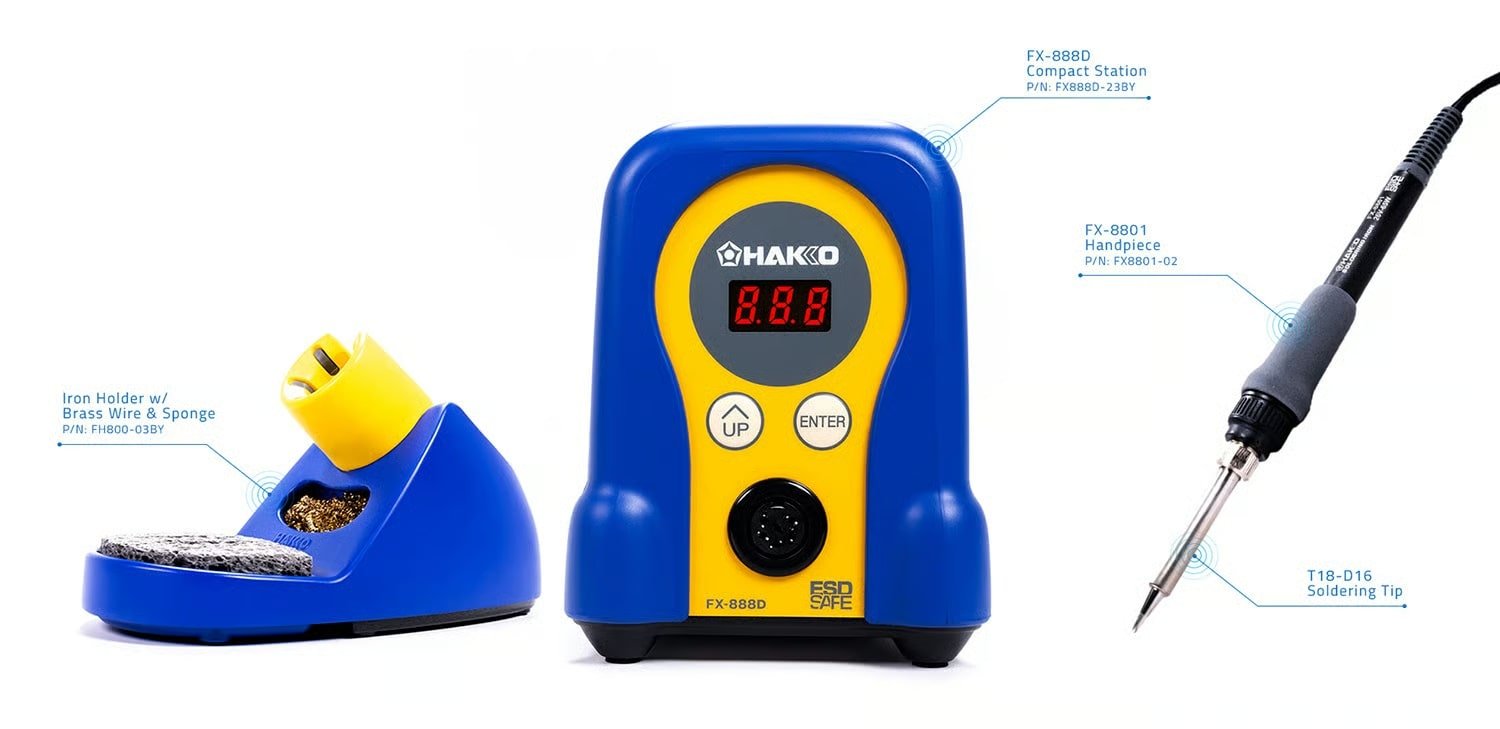
If you’ve spent any time on electronics forums or watched any Tutorial Australia videos, you’ve seen “just go with the Hakko” about a million times. And honestly? It’s not bad advice. The Hakko FX-888D soldering station really is the gold standard. When people compare vs Hakko FX888D, everything else comes up short on pure performance.
The Good Stuff
- Rock solid temp stability (±2°C under load)
- Heats up in about 25 seconds
- 5 preset temperatures with password protection (if you’re sharing a workshop)
- T18 tip ecosystem is HUGE – 33+ tip styles, plus you can find replacement tips and tips online everywhere
- Compact footprint, doesn’t take up much desk space
- The Hakko station holder is genuinely excellent
- Easy to change the temperature on the fly
- Will probably outlive you
The Not-So-Good
- £120-140 is a lot for a hobby tool
- Two-button digital interface is… quirky. Takes getting used to
- The blue/yellow colour scheme is polarising (some people think it looks like a Fisher-Price toy 😂)
- Cable can twist during use
Bottom line: If you solder daily, if you’re building valuable projects, or if you just want to buy something once and never think about it again the FX-888D is the answer. You’ll be receiving a state-of-the-art soldering station that will put you in good stead for years. But for weekend warriors? There are better ways to spend £160+.
Weller WE1010 The Feature King
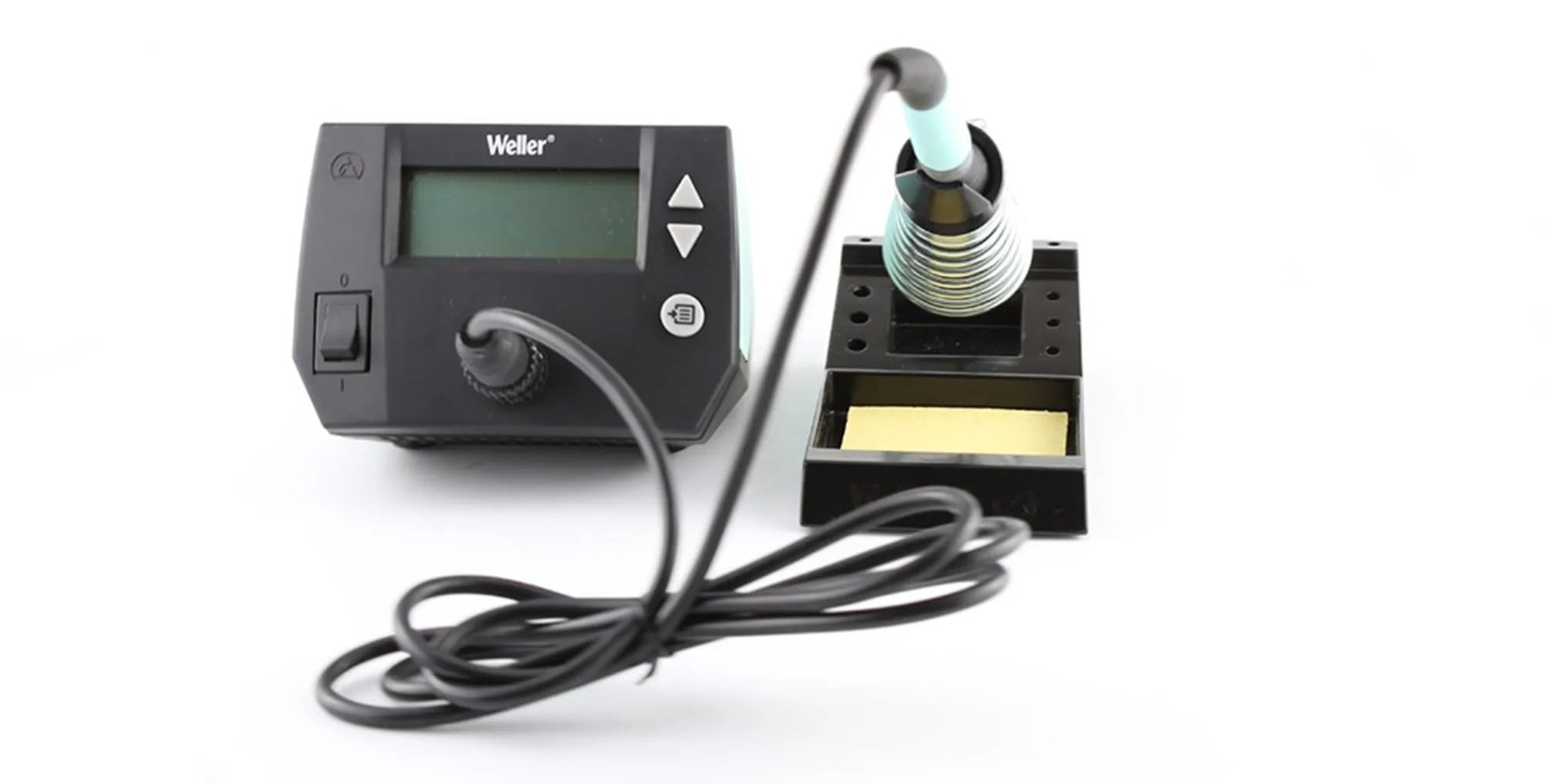
The Weller WE1010 Digital Soldering Station is what happens when engineers go “what if we added ALL the features?” It’s the sophisticated German Weller in the corner vs the sophisticated German Weller… wait, I mean it’s going head-to-head with the Japanese Hakko in one corner. You get the idea.
The Good Stuff
- Colour LCD showing setpoint AND current temp simultaneously
- Three programmable preset temps – brilliant for switching between lead-free and leaded
- Auto-standby after 5 mins (drops to 150°C to preserve tips)
- Tool-free tip replacement while hot – genuinely useful
- The Weller WE1010 digital offers greater ergonomics – the soldering pencil feels great
- Silicone cable resists heat damage
- Locking safety rest for shared workshops
The Not-So-Good
- ET tips are pricey (£12-20 each) and selection is smaller than Hakko
- Early batches had LCD failures (seems fixed now, but worth noting)
- Heat-up is slower – about 76 seconds vs Hakko’s 25
- Larger footprint than the Hakko
- Stand isn’t as sturdy
Bottom line: The WE1010 makes soldering more pleasant. The features are genuinely useful. But core performance? The Hakko FX-888D soldering station and the Weller soldering station are both excellent choices. Pick the Weller if you value UX over raw speed — it comes down to personal preference.
YIHUA The Value Champion Nobody Wants to Admit They Love
Okay, here’s where I’ll probably catch some flak. The snobbery around YIHUA in some forums is wild. “Chinese junk,” they say, while using phones and laptops made in… you guessed it. 🙄
Here’s the truth: YIHUA soldering equipment has systematically figured out what hobbyists actually need, then delivered high-quality soldering stations with features you’d expect from premium brands — at half the price. Are they as refined as Hakko? No. Do they work for 90% of what we do? Absolutely yes.
Let me walk you through the models that actually matter:
YIHUA 937D+ (£39) Best Budget Soldering Station
This is where most people should start. At £39, it costs less than a decent dinner out. Digital display, Hakko-compatible 900M tips, ESD safe. If you’re looking for a complete soldering iron kit for beginners, this is it. Will it last forever? Probably not. Will it teach you to solder and build dozens of projects? Absolutely.
I keep a 937D+ as a travel iron. It’s survived being stuffed in luggage more times than I can count. At this price, I don’t baby it.
→ View YIHUA 937D+ at Kunkune (£39)
YIHUA 939D+ III EVO (£69.50) The Sweet Spot
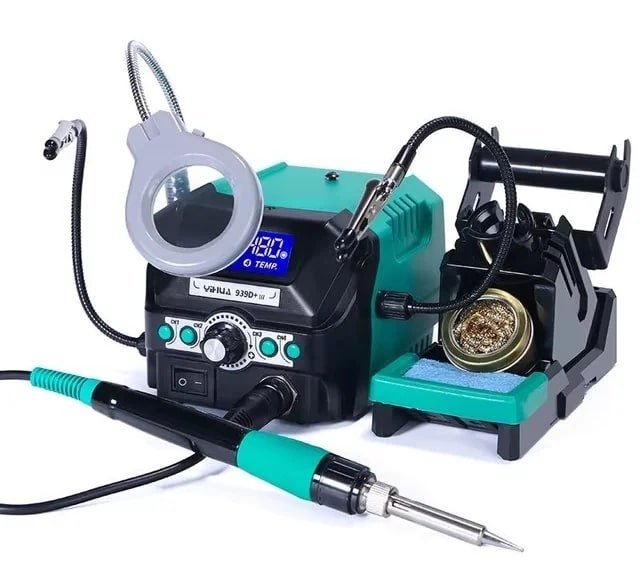
This is the one. If you’re coming from a basic iron and want something that’ll actually get you right up to speed with proper soldering, the extra £30 over the 937D+ gets you meaningful upgrades:
- 75W power (beats both Hakko and Weller)
- Proper PID control vs simple thermostat
- Sleep mode extends tip life 3-5x
- Metal housing better durability and heat dissipation
- Hakko T18 tip compatible — upgrade to genuine tips and performance jumps noticeably. Or grab affordable 900M tips from Kunkune’s soldering iron tips collection for just a few quid each
One guy on EEVblog forums put it perfectly: “I have a YIHUA 937D+ and it’s compatible with Hakko tips. I’ve abused it nearly every day for five years so far.” Same applies to the 939D+, just with better everything.
→ View YIHUA 939D+ III EVO at Kunkune (£69.50)
YIHUA 982 (£68) – Precision C210/C245 Dual-Handle System
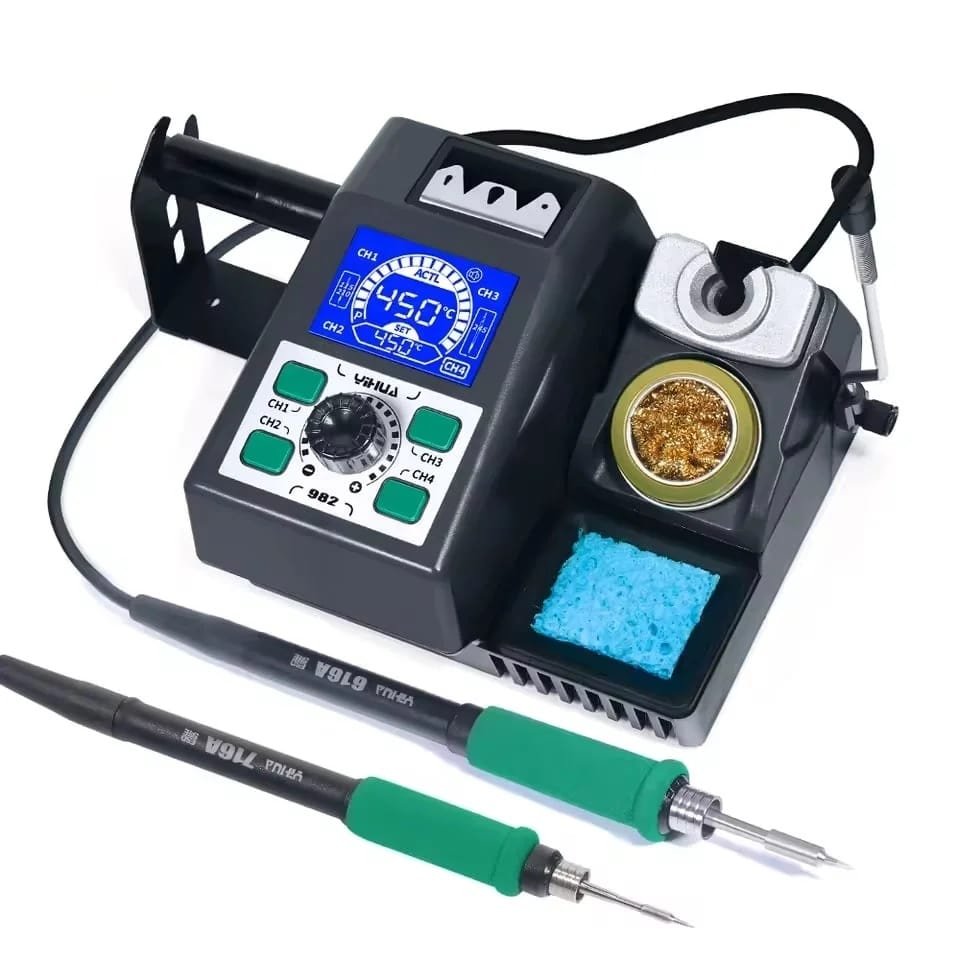
Okay, this one’s interesting. The YIHUA 982 uses cartridge-style C210/C245 tips – the same tech in JBC stations costing 3-4x more. The heating element is inside the tip itself, not separate from it.
Why does this matter? Faster heat-up, instant thermal recovery, better precision for fine-pitch work. If you’re doing 0402 components, QFN, or drag-soldering TSSOP, the 982 makes life easier.
→ View YIHUA 982 at Kunkune (£68)
YIHUA 853AAA-I (£135) – 3-in-1 Rework Station
For the “I want it all” crowd, this complete hot air rework station combines:
- Soldering iron with digital temp control
- Hot air rework gun for SMD removal/placement
- LCD preheating platform for BGA work and delicate repairs
The preheating platform is clutch for mobile phone repairs and BGA rework. Warms the PCB from below, reduces thermal stress, prevents warping. At £135 for all three tools, it’s genuinely good value.
→ View YIHUA 853AAA-I at Kunkune (£135)
Real-World Testing: How They Actually Perform
Theory’s great and all, but here’s what happened when I actually used these stations:
Test 1: Through-Hole Assembly (Easy Mode)
Task: Solder 100 resistors, caps, and IC sockets to a prototype PCB.
- Hakko FX-888D: Flawless. 42 minutes.
- Weller WE1010: Equally good. 43 minutes.
- YIHUA 939D+: Needed one tip cleaning break. 46 minutes.
Verdict: All three nail basic through-hole. The 4-minute difference? Negligible.
Test 2: SMD Work (Medium Difficulty)
Task: 0805 resistors/caps and SOIC chips to a breakout board.
- Hakko FX-888D: Chisel tip made short work of it. No bridges.
- Weller WE1010: Similar results. Slightly faster recovery.
- YIHUA 939D+: Struggled with included tips. Swapped to genuine Hakko T18-D12 and performance improved dramatically.
Verdict: Tip quality matters enormously. YIHUA + genuine Hakko tips = similar performance to actual Hakko. Mind blown. 🤯
Test 3: Heavy Thermal Mass (Hard Mode)
Task: Solder 18AWG wire to a steel chassis ground point.
- Hakko FX-888D: 4-5 seconds. No drama.
- Weller WE1010: Similar, maybe half a second slower.
- YIHUA 939D+: Struggled at 380°C. Bumped to 420°C and added pressure – got there, but clearly working harder.
Verdict: All three completed the task. For regular heavy gauge work, the premium brands have more headroom. For occasional big joints, YIHUA handles it.
The Money Talk: Total Cost of Ownership
Let’s do the maths on what you’re actually spending:
| Item | Hakko | Weller | YIHUA 939D+ |
|---|---|---|---|
| Station | £160 | £170 | £69.50 |
| Extra tips (3) | £45 | £48 | £12-15 (Kunkune) |
| Solder/flux | £15 | £15 | £15 |
| TOTAL | £220 | £233 | ~£100 |
Even with quality tips, the complete YIHUA soldering equipment setup is £120-130 cheaper than the big brands. That’s money for components, better solder, or maybe a hot air station. Speaking of which…
Soldering 101: Setting Up Your New Station Right
Whether you go Hakko, Weller, or YIHUA, here’s how to start right. Consider this your quick soldering tutorial to get you right up to speed:
First Power-On Checklist
- Inspect everything – check for shipping damage, verify you got all the tips and accessories
- Break in the tip – new tips have protective coating. Heat to 350°C and apply solder immediately. It should flow and tin the tip. If it balls up, something’s wrong.
- Set your temps – Lead-free: 380-400°C. Leaded: 330-350°C. Sensitive components: 280-300°C.
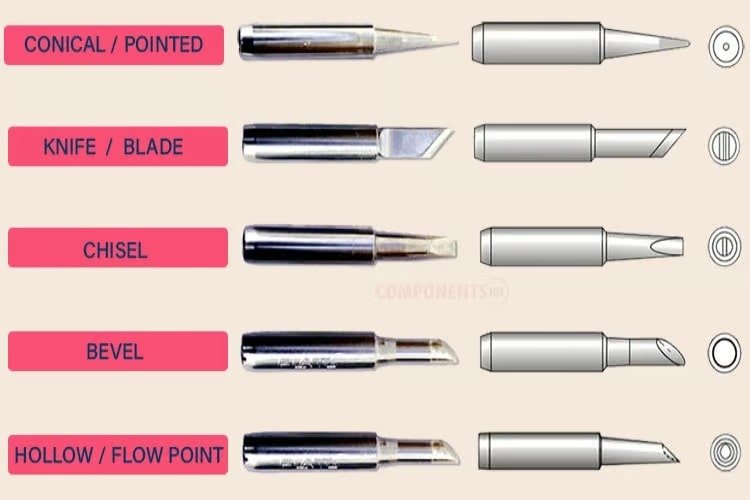
- Get the right tip — Start with a small chisel (2-3mm). Handles 90% of hobbyist work.
Daily Maintenance (Do This or Your Tips Die)
- Tin before work – Power on, wait for temp, apply solder to tip immediately
- Use brass wool, not wet sponge – thermal shock from wet sponges kills tips faster
- Re-tin every 3-5 joints – keeps the tip happy
- Tin before power-off – never leave a bare tip to cool
This simple routine extends tip life 5-10x. I get 12-18 months from quality tips with daily use. Neglected tips die in weeks.
FAQ: Questions I Keep Seeing
“Can I use Hakko tips in a YIHUA station?”
Yep! The 939D+ uses Hakko T18-compatible elements. Pop in genuine Hakko tips and performance jumps noticeably. You can also use affordable 900M compatible tips — quality results for a fraction of what Hakko charges. Best of both worlds – budget station, quality tips.
“Which is best for lead-free solder?”
All three handle lead-free fine. Lead-free melts about 30-40°C higher than leaded, so you need more heat. Set to 380-400°C (higher than you’d expect) and use slightly larger tips. The Weller has a tiny edge in heat recovery, but all are adequate.
“How long do these stations actually last?”
Hakko FX-888D: 5-15 years. Legendarily durable.Weller WE1010: 3-8 years expected.YIHUA 939D+: 2-5 years realistically. At £70, even 2-3 years is solid value.
“Do I need ESD-safe?”
All three stations are ESD-safe when connected to UK mains earth. For hobbyist work, that’s usually enough. If you’re paranoid (or working on sensitive RF stuff), add a wrist strap and ESD mat.
“What about hot air for SMD rework?”
If you need hot air capability, check out the YIHUA 853AAA-I (£135) – it combines soldering iron, hot air gun, and preheating platform in one unit.
The Verdict: What Should YOU Buy?
Get the Hakko FX-888D (£140-180) if…
- You solder multiple hours daily
- You work on valuable projects where reliability matters
- You want “buy it for life” and never think about it again
- Budget isn’t a major concern
Get the Weller WE1010 (£150-190) if…
- You value features and nice UI
- You frequently switch between solder types
- The colour LCD and presets appeal to you
- You’re in a shared workshop (safety features)
Get the YIHUA 939D+ III EVO (£69.50) if…
- You’re a hobbyist who solders weekly (not daily)
- Budget matters but you don’t want to compromise performance
- You want Hakko tip compatibility without Hakko prices
- You’re okay with “adequate” build quality for major savings
Get the YIHUA 937D+ (£39) if…
- You’re just starting out
- You’re not sure if electronics is for you yet
- You need a travel/backup iron
- £70 feels like too much to risk
Here’s what I’ve learned after years of this: the best soldering station is the one you’ll actually use. A £160 Hakko gathering dust because you felt guilty buying it doesn’t serve anyone. A £70 YIHUA that gets pulled out weekly and helps you complete projects delivers infinitely more value. At the end of the day, it’s personal preference — both the Hakko FX-888D and YIHUA station are both excellent products for different budgets.
Stop overthinking the tool and start building projects. Check out tutorials regarding soldering to get your technique right — your skills matter infinitely more than your station’s brand name.