

Raspberry Pi Compatible Accessories & Components
Explore our comprehensive range of Raspberry Pi accessories designed to expand your Pi’s capabilities. From essential power supplies and protective cases to advanced HATs (Hardware Attached on Top) and GPIO expansion boards, we stock components compatible with all Pi models including the Raspberry Pi 5, Pi 4, Pi Zero 2 W, and Pico. Whether you’re prototyping a new project, adding sensors for IoT applications, or building a complete development system, find the accessories and components you need for your electronics projects.
Showing all 4 resultsSorted by price: high to low
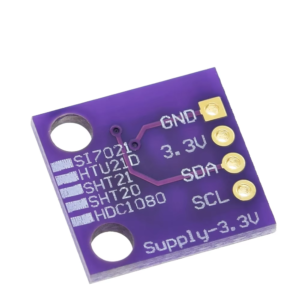
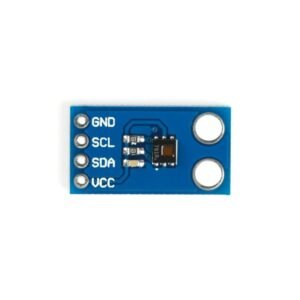
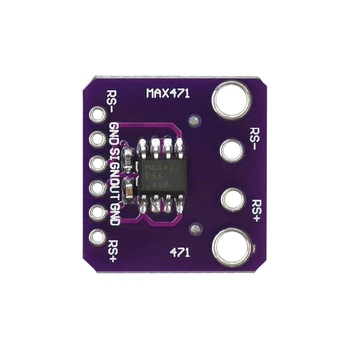
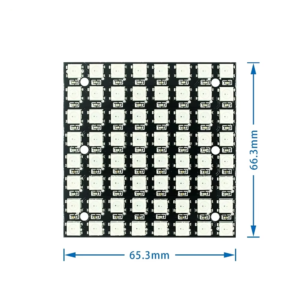
Showing all 4 resultsSorted by price: high to low
Essential Considerations for Raspberry Pi Accessories
Selecting the right accessories depends heavily on your specific Pi model and project requirements. The GPIO (General Purpose Input/Output) pin configuration varies between models—the Pi 5 and Pi 4 use a 40-pin header, while earlier models and the Pi Zero use different configurations. Before purchasing expansion boards or HATs, verify physical compatibility and power requirements.
Power delivery is critical. The Pi 4 and Pi 5 require USB-C power supplies capable of delivering 3A (15W), while the Pi Zero 2 W operates efficiently on 2.5A. Underpowered supplies cause voltage throttling, leading to system instability and corrupted SD cards. If you’re adding multiple peripherals or power-hungry HATs, calculate total current draw and select an appropriately rated PSU.
Thermal management becomes essential for sustained workloads. The Pi 5 particularly benefits from active cooling when running compute-intensive tasks like video encoding, machine learning inference, or continuous server operations. Passive heatsinks suffice for light-duty applications, but fan-cooled cases or dedicated cooling solutions maintain optimal temperatures under heavy loads.
Applications and Project Use Cases
IoT and Home Automation Projects
Raspberry Pi accessories enable comprehensive sensor integration for environmental monitoring, smart home control, and data logging applications. GPIO expansion boards simplify connections to temperature sensors, humidity detectors, and motion sensors. Relay HATs control mains-powered devices, while camera modules add computer vision capabilities for security systems or object detection projects.
Electronics Prototyping and Development
Engineers and students leverage breadboard-compatible GPIO breakout boards for circuit testing and prototype development. These accessories provide labeled pin access, making it straightforward to connect your Pi to external circuits without risking damage to the board itself. Combined with Arduino sensors, you can create hybrid systems that utilize both platforms’ strengths.
Educational and Learning Applications
Starter accessory kits bundle essential components for programming education and electronics fundamentals. GPIO expansion boards with labeled pins help students understand digital I/O concepts, while sensor modules provide hands-on experience with data acquisition and processing. These accessories transform the Pi from a simple computer into a complete learning platform for STEM education.
Understanding HATs, pHATs, and Expansion Boards
HATs (Hardware Attached on Top) are standardized expansion boards that connect directly to the Pi’s 40-pin GPIO header. They include an identification EEPROM that allows automatic configuration, eliminating manual setup for many accessories. HATs provide dedicated functionality—audio DACs for high-fidelity sound, motor controllers for robotics, PoE (Power over Ethernet) for network-powered installations, and AI accelerators for machine learning tasks.
pHATs (partial HATs) offer the same GPIO compatibility in a smaller form factor, making them ideal for compact builds or Pi Zero projects where space constraints matter. They don’t cover the entire board surface, allowing easier access to other ports and headers.
Generic expansion boards provide specialized capabilities without adhering to the HAT specification. These include GPIO extenders, breadboard adapters, and specialized modules for specific applications. While they lack automatic configuration, they often offer more flexibility in positioning and stacking with other accessories.
Compatibility and Integration Considerations
GPIO pin assignments remain consistent across modern Pi models (3B+, 4, 5), ensuring most accessories designed for one model work with others. However, physical dimensions differ—cases and some mounting-specific accessories require model-specific versions. The Pi 5 introduced PCIe expansion capabilities, opening new possibilities for NVMe storage HATs and other high-speed peripherals not available on earlier models.
When combining multiple accessories, check for pin conflicts. Multiple I2C devices can share the same bus with unique addresses, but GPIO pins used by one HAT become unavailable for others unless using specialized stacking headers. Electronic components like resistors, capacitors, and connectors help create custom integration solutions when standard accessories don’t precisely match your requirements.
Power budget accumulates when stacking accessories. A Pi 4 draws approximately 600mA at idle; adding a camera module, cooling fan, and powered USB peripherals can exceed the standard PSU’s capability. Calculate cumulative current requirements and factor in 20-30% headroom for stable operation.
Related Accessories and Component Ecosystems
Pi projects frequently integrate with Arduino-compatible boards for real-time control and analog input capabilities. The Pi handles high-level processing, networking, and user interfaces, while Arduino boards manage time-critical tasks and analog sensor reading. This hybrid approach leverages each platform’s strengths.
For projects requiring precision measurements or signal debugging, handheld oscilloscopes provide essential visibility into GPIO signal quality, PWM waveforms, and I2C communication timing. These tools prove invaluable when troubleshooting intermittent hardware issues or validating custom circuit designs.
Permanent installations benefit from proper assembly tools. Soldering stations enable reliable header installation, custom cable fabrication, and through-hole component mounting for HAT modifications or breakout board assembly. Quality soldering equipment ensures durable connections that withstand vibration and temperature cycling in embedded applications.
Frequently Asked Questions
Where to buy Raspberry Pi accessories?
Kunkune offers a comprehensive selection of Raspberry Pi accessories including HATs, expansion boards, power supplies, cooling solutions, and GPIO breakout boards suitable for hobbyists, students, and professional engineers. Their inventory covers components compatible with all current Pi models, from the Pi Zero to the Pi 5, with detailed specifications provided for each product. UK-based customers benefit from local stock availability and fast delivery times, making Kunkune a reliable source for both individual components and complete project accessory packages.
What accessories are essential for a Raspberry Pi?
At minimum, you need a compatible power supply (USB-C for Pi 4/5, micro-USB for earlier models), a microSD card (Class 10, minimum 16GB), and appropriate cables for display connectivity. A protective case prevents physical damage and improves thermal management. For development work, add a GPIO breakout board or breadboard adapter to simplify prototyping without risking damage to the Pi’s header pins. Active cooling becomes essential for sustained intensive workloads.
What’s the difference between HATs and generic expansion boards?
HATs follow the official Raspberry Pi specification with standardized dimensions, mounting holes, and an identification EEPROM for automatic configuration. They’re guaranteed compatible with the official Pi case designs and stack properly with other HATs. Generic expansion boards offer similar functionality without HAT certification—they may have non-standard dimensions, lack automatic setup, or use different mounting schemes. Both work effectively; HATs provide better standardization while generic boards often cost less.
Can I stack multiple HATs on one Raspberry Pi?
Physical stacking is possible using extended GPIO headers, but functional compatibility requires careful pin management. Each HAT uses specific GPIO pins; stacking works only when there’s no conflict. Power and I2C pins can typically be shared, but dedicated GPIO assignments (SPI, UART, specific digital pins) must remain unique to each HAT. Some manufacturers provide compatibility charts showing which HATs stack successfully together.
What power supply rating does my Pi need with accessories?
Base Pi models require 2.5A (Pi 3), 3A (Pi 4), or 5A (Pi 5 with peripherals). Add 500mA per USB device, 100-200mA per HAT (varies by complexity), and 200-400mA for camera modules. A Pi 4 with one HAT, a camera, and two USB devices needs approximately 3.5-4A. Select PSUs with 20% overhead for stable operation and longevity. Undervoltage causes system instability, corrupted storage, and unexpected shutdowns.
Are Arduino accessories compatible with Raspberry Pi?
Many Arduino sensor modules and breakout boards work with Raspberry Pi through GPIO pin connections, but voltage level compatibility requires attention. Arduino operates at 5V logic levels, while Pi uses 3.3V GPIO. Direct connection of 5V outputs to Pi GPIO risks permanent damage. Use level shifters or voltage dividers for safe interfacing, or select sensors explicitly designed for 3.3V operation. I2C and SPI devices typically work directly if they support 3.3V logic levels.