

63/37 Solder: The One That Just Behaves
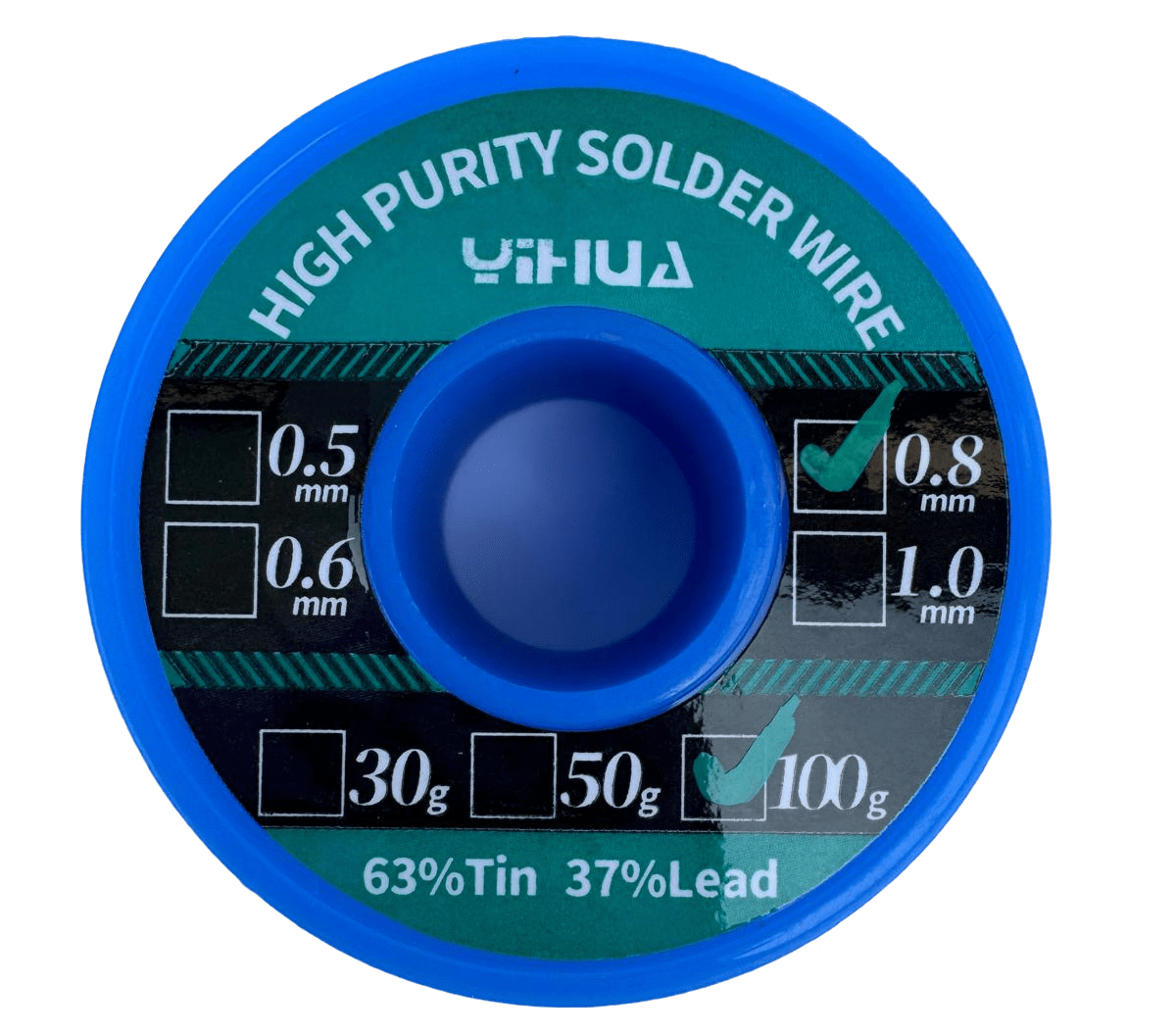
Eutectic 63% tin / 37% lead | Melts at 183°C | Rosin core | 0.8 mm or 1 mm | 100 g
If you are learning to solder, or you have been fighting dull, cracked joints, this is the wire that removes a variable. 63/37 is eutectic: it goes from solid to liquid at a single temperature, 183°C, with no plastic phase in between.
That matters more than it sounds. A non-eutectic alloy passes through a slushy stage as it cools, so if the joint moves during those moments you get a disturbed, grainy joint. Eutectic solder skips that entirely. It sets the instant you take the heat away.
Which Diameter Should You Buy?
| Diameter | Use it for |
|---|---|
| 0.8 mm most people | General electronics, through-hole, most surface-mount, connectors. If you are buying one reel, buy this one. |
| 1 mm | Heavier joints, thicker wire, terminals and anything tied to a ground plane, where you want to deliver solder faster. |
The rule of thumb is to match the wire roughly to the pad, not to the job you did last week. Too thick and you flood a fine joint. Too thin and you sit there feeding wire into a big one while the heat spreads where you do not want it.
Leaded or Lead-Free?
Both are stocked and both have a place. The honest summary is that leaded is easier to work with and lead-free is what you need if the work is going to be sold commercially.
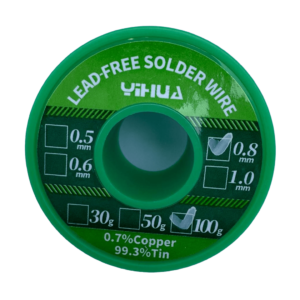
| 63/37 leaded | Sn99.3/Cu0.7 lead-free | |
|---|---|---|
| Melting point | 183°C, eutectic | Around 227°C |
| Plastic phase | None | Present |
| Iron temperature | 280-320°C | 320-360°C |
| Ease of use | Easier, flows and wets readily | Needs more heat and more patience |
| Joint appearance | Bright and shiny | Duller, which is normal not a fault |
| RoHS / commercial resale | No | Yes |
For hobby work, repairs and learning, leaded 63/37 is the sensible default. Wash your hands afterwards and do not eat at the bench, which is the actual lead precaution. The fumes you see are flux, not lead, and that is what extraction is for.
Using It Well
- Set the iron to 280-320°C. Higher does not make it flow better, it just burns the flux off before it reaches the joint.
- Heat the joint, not the solder. Touch the wire to the pad and the lead, not to the tip.
- Let it set undisturbed. With eutectic solder that is almost instant, which is the whole advantage.
- The rosin core does the cleaning. Extra flux helps on dirty or oxidised joints, but you will not need it on fresh work.
Specifications
| Specification | Details |
|---|---|
| Alloy | 63% tin / 37% lead, eutectic |
| Melting point | 183°C (361°F) |
| Plastic phase | None, melts and solidifies at one temperature |
| Flux | Rosin core |
| Diameters | 0.8 mm and 1 mm |
| Reel weight | 100 g |
| Recommended iron temperature | 280°C to 320°C |
| Suits | Through-hole, SMD, PCB assembly, component repair, general electronics |
| RoHS | No, contains lead |
Frequently Asked Questions
What diameter solder should I use for electronics?
0.8 mm for almost everything: general electronics, through-hole and most surface-mount work. Go to 1 mm for heavier joints, thicker wire and anything tied to a large ground plane, where you want to deliver solder faster. If you are only buying one reel, buy 0.8 mm.
What does eutectic actually mean?
It means the alloy melts and freezes at a single temperature, 183°C, rather than passing through a soft plastic stage on the way. A non-eutectic alloy stays slushy across a range as it cools, so any movement in that window leaves a grainy, weak joint. Eutectic solder sets the moment you lift the iron, which removes one of the most common causes of bad joints.
Is leaded solder safe to use at home?
With sensible handling, yes, and it is still what most hobbyists use. Lead does not vaporise at soldering temperatures, so it is not what you are breathing. The smoke is vaporised rosin flux, which is a respiratory irritant, so work with ventilation or an extractor. Lead matters through hand-to-mouth contact, so wash your hands afterwards and keep food and drink off the bench.
Leaded or lead-free, which should I buy?
Leaded 63/37 if the work is for you: it flows better, wets more readily, needs a lower iron temperature and is more forgiving. Lead-free if you are selling what you build, because RoHS applies to commercial products. Plenty of people keep both reels on the bench.
What temperature should I set my iron to?
280 to 320°C. Turning it higher does not make the solder flow better, it just burns the flux off before it gets to the joint and shortens tip life. If a joint is slow, use a bigger tip rather than more heat.