







926LED-IV: A Whole Bench, Not Just a Station
90-480°C, PID | 3 memory presets | ESD safe, under 2Ω tip-to-ground | Magnifier and helping hands built in
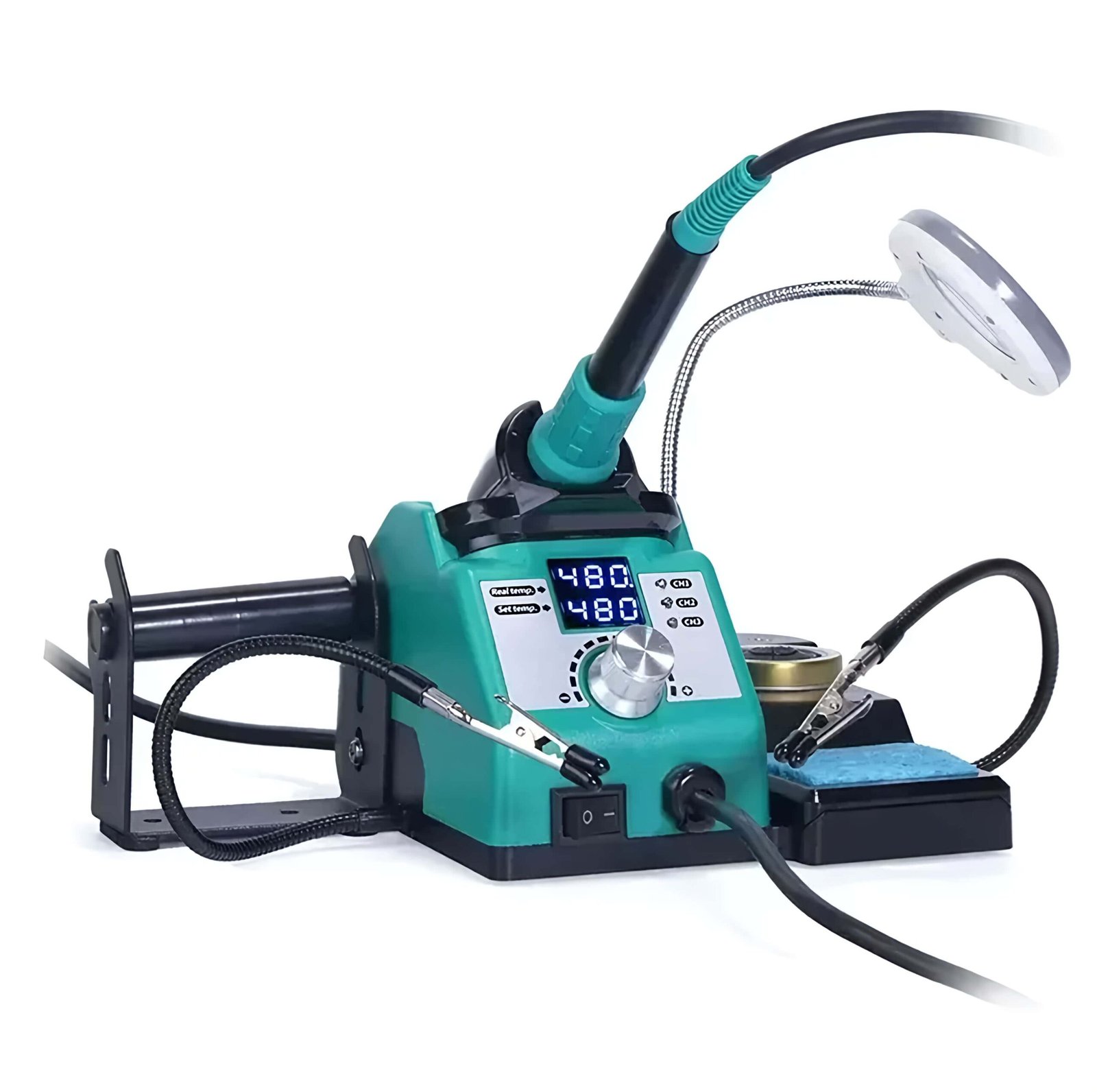
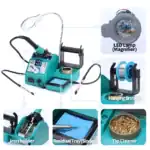
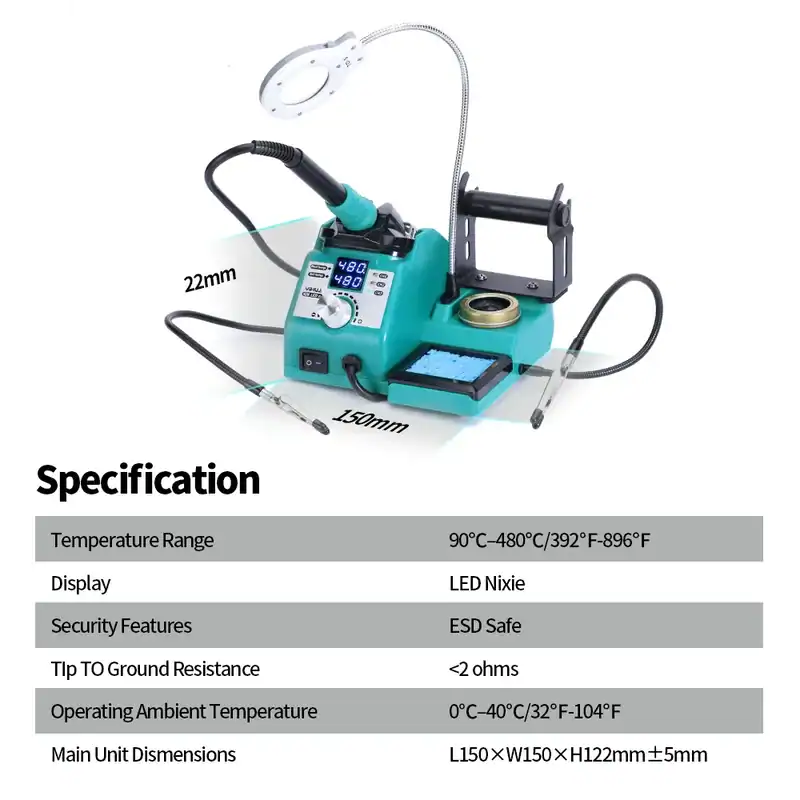
Most entry-level stations give you a box, an iron and a sponge, and then you spend the same money again on a magnifier, a third hand and somewhere to put your solder. The 926LED-IV has all of it bolted to the same base: an LED magnifier lamp on a flexible arm, two helping-hand arms with clips, a spool holder, a brass wool cleaner and a sponge tray.

What Is Actually Built Into It
| Feature | What it is |
|---|---|
| LED magnifier lamp | Ring light with a magnifying lens on a flexible arm |
| Two helping-hand arms | Flexible arms with crocodile clips, mounted on the station body |
| Solder spool holder | Hanging tin rack on the side of the base |
| Iron holder | Sprung cradle, part of the base |
| Brass wool tip cleaner | Recessed into the base |
| Sponge tray | Residual solder tray with sponge |
None of it is an add-on and none of it needs a separate mains socket. For a first bench that is the difference between soldering tonight and ordering three more things first.
The Controls Worth Knowing About
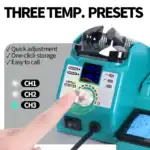
- Three memory presets: CH1, CH2 and CH3 hold your working temperatures. Most people set one for leaded, one for lead-free and one lower for heat-sensitive parts, then switch with a button instead of dialling in each time.
- Set and actual temperature together: The display shows both at once, so you can see the station recovering under load rather than guessing.
- PID control: Holds the set temperature rather than overshooting and sagging around it, which is what separates a real station from a dial with numbers on it.
- Digital calibration: If the display drifts from the true tip temperature, measure it and enter the actual figure. The station corrects itself. Budget stations usually skip this entirely.
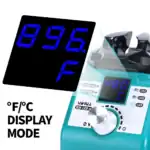
- °C or °F: Switchable, which matters more than it should if you are following an American tutorial.
- Sleep mode: Drops the iron when you leave it idle, with a selectable delay. It is what makes tips last.

ESD and Tip Grounding
The station is ESD safe and the tip-to-ground resistance is specified at under 2 ohms. That is the figure to look for, because it is the J-STD-001 threshold: static bleeds away through the tip and to earth, rather than through whatever component you are touching.
It is worth checking with a multimeter when it arrives and again occasionally, which is sensible practice with any station rather than a criticism of this one. It takes about a minute.
Tips and Consumables
It runs the 900M-T tip family, which is the most widely used soldering tip format there is. Ten profiles are stocked individually, so you buy the shapes you use rather than a set with six you will never fit, and the same tips fit most 936-style stations if you own more than one.
Who It Suits
It suits a first proper bench: hobby electronics, kit building, board repair, prototyping, anyone currently working with a fixed-temperature iron and a rolled-up towel for a third hand. The magnifier alone changes what you can attempt on small parts.
It suits you less well if you are regularly soldering to heavy ground planes or thick copper, where you want more power in reserve. The 937D and the 939D-III EVO are the steps up there, though neither brings the magnifier and helping hands with it.
Specifications
| Specification | Details |
|---|---|
| Model | YIHUA 926LED-IV |
| Temperature range | 90°C to 480°C (392°F to 896°F) |
| Temperature control | PID with digital calibration |
| Display | LED, shows set and actual temperature together |
| Memory presets | 3 channels (CH1, CH2, CH3) |
| Units | °C or °F, switchable |
| Sleep mode | Automatic, with selectable delay |
| ESD safe | Yes |
| Tip-to-ground resistance | Under 2 ohms |
| Tip format | 900M-T |
| Operating ambient temperature | 0°C to 40°C (32°F to 104°F) |
| Main unit dimensions | 150 × 150 × 122 mm (±5 mm) |
Frequently Asked Questions
What actually comes with it?
More than the name suggests. Alongside the station and iron you get an LED magnifier lamp on a flexible arm, two helping-hand arms with clips, a solder spool holder, a sprung iron cradle, a brass wool tip cleaner recessed into the base and a sponge tray. It is a complete bench in one unit rather than a station you then have to build a bench around.
Is this the 926LED-IV or an earlier version?
This is the 926LED-IV. YIHUA has released several generations under the 926 name and the differences are not obvious from the model number alone, so if you are cross-referencing a review or a forum thread, check which version it is describing.
What tips does it take?
The 900M-T family, which is the most common soldering tip format there is. Ten profiles are stocked individually, from a fine point for SMD to a 3.2 mm bevel for heavy joints, and the same tips fit most 936-style stations.
Is it ESD safe?
Yes, and the tip-to-ground resistance is specified at under 2 ohms, which is the figure that matters. That is the J-STD-001 threshold, so static bleeds away through the tip rather than through whatever you are working on. Worth checking with a multimeter on arrival, as you would with any station.
What are the three memory channels for?
Storing your working temperatures so you can switch with a button rather than dialling in from scratch. Most people end up with one for leaded solder, one for lead-free and one lower setting for heat-sensitive parts.
Is it a good first soldering station?
It is a sensible one, yes. You get real PID control rather than a dial with numbers printed on it, a calibration function so the display can be trusted, and the magnifier and helping hands that a beginner otherwise buys separately and badly. What you do not get is high power for heavy ground planes. If your work is mostly through-hole and hobby electronics, that will not hold you back.
Reviews
There are no reviews yet.