


902-Series Tips: The Heavier Barrel
6.6 mm barrel | 40 mm long, 25 mm insertion | 200-480°C | Ten profiles, sold singly
The 902 series is YIHUA’s higher-mass tip format. The barrel is 6.6 mm rather than the 900M’s narrower body, which means more copper behind the working face and more heat available where it matters.
That extra mass is what you want for lead-free solder, stained glass work and dense board assembly, where a thinner tip cools faster than you can work.
Which 902 Tip Do You Need?
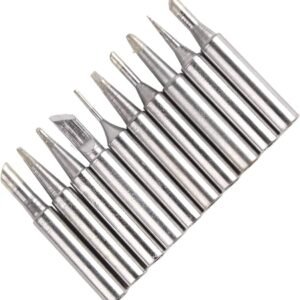
| Model | Shape | Best for |
|---|---|---|
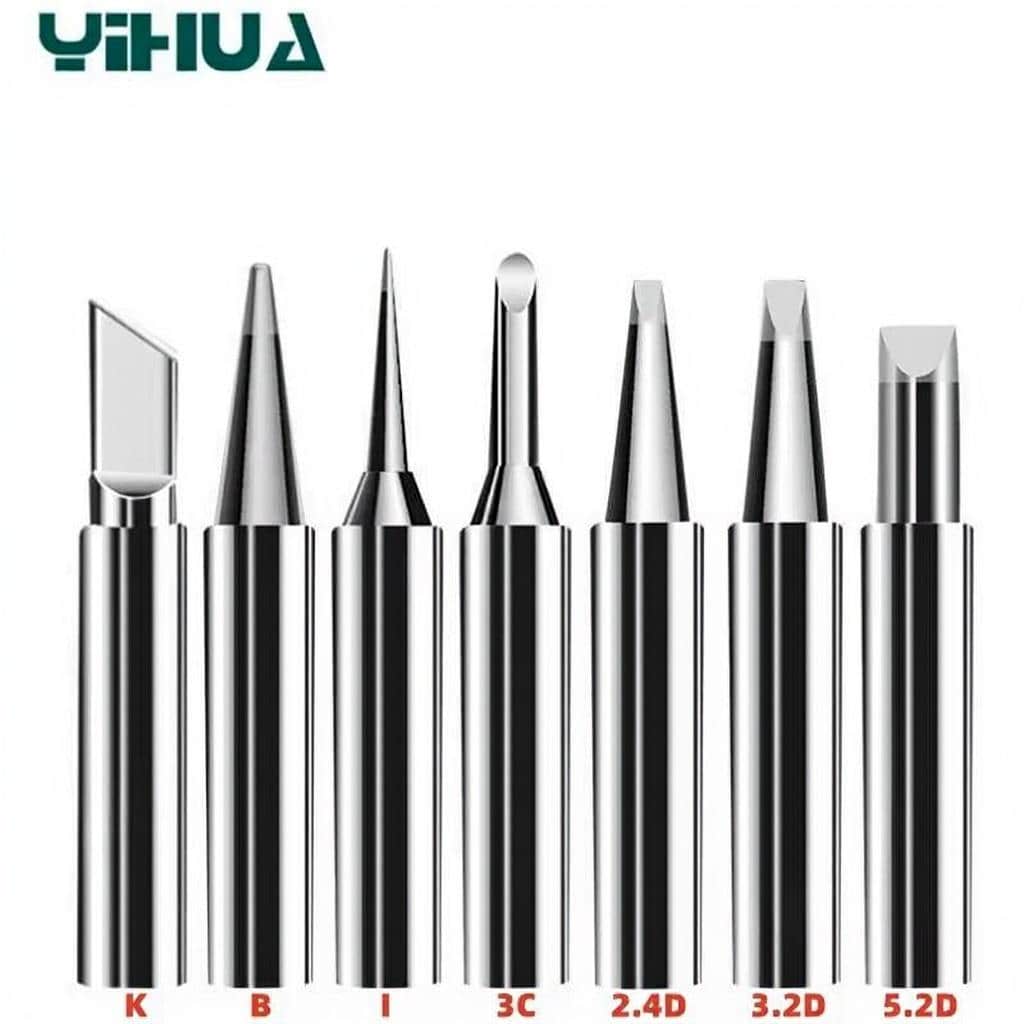
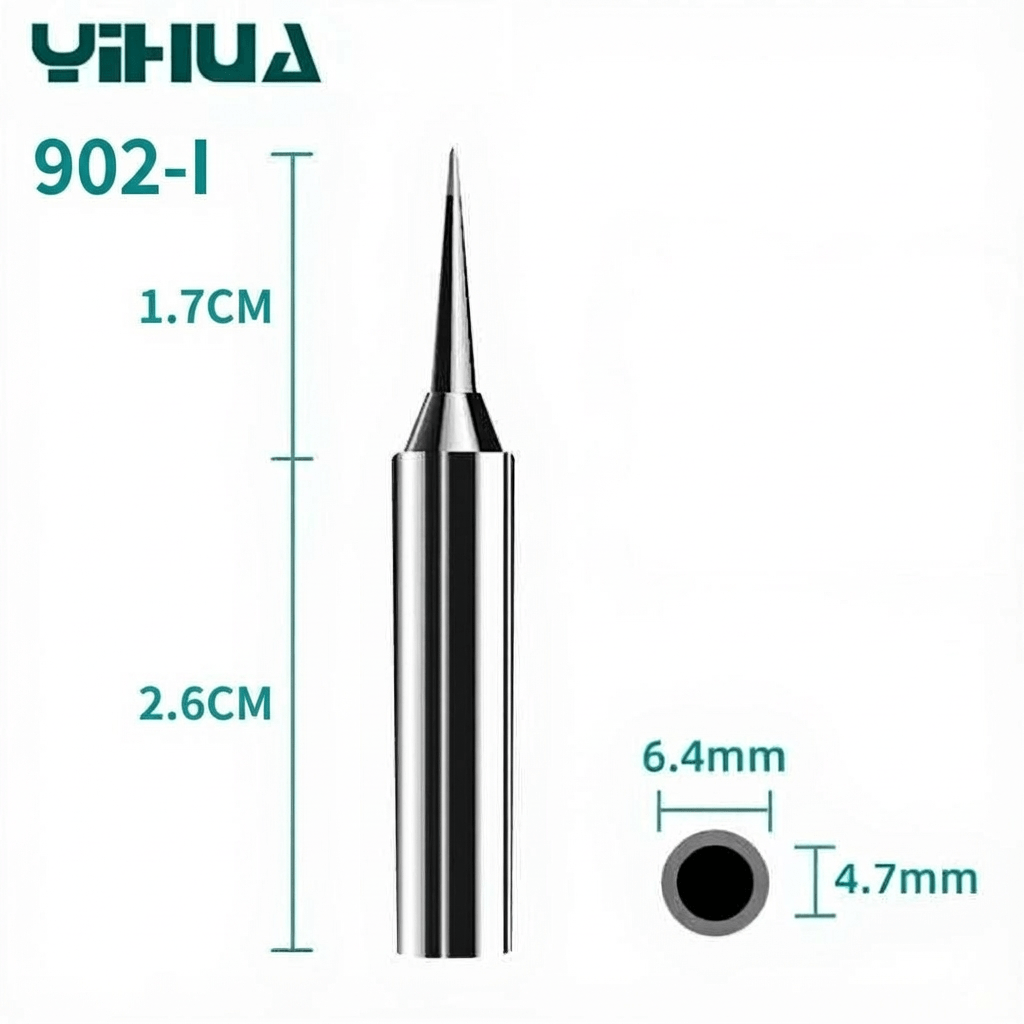
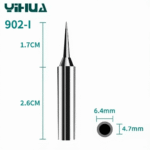
| 902-I | Fine point | Fine SMD, individual pins, precision rework |
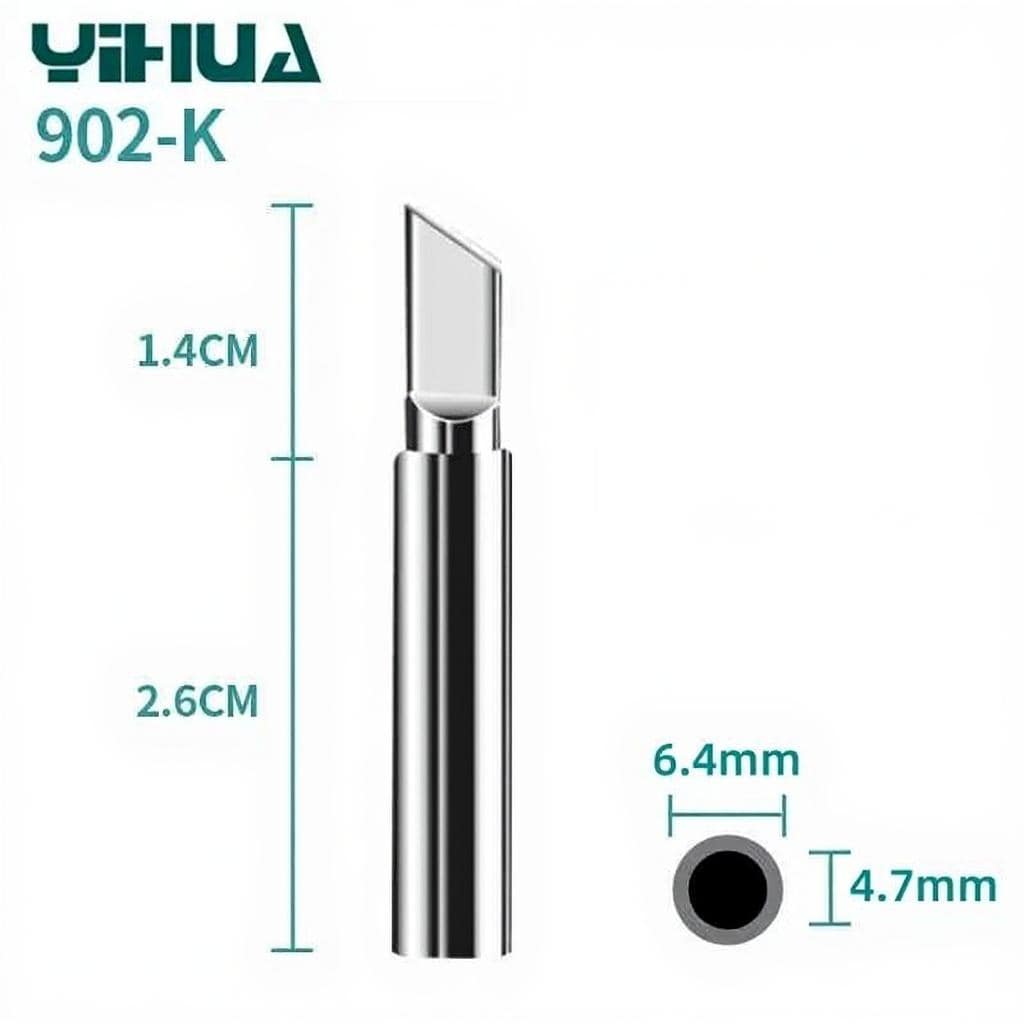
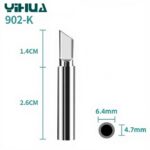
| 902-K | Angled knife | Drag soldering, SOP and QFP packages, working past tall parts |
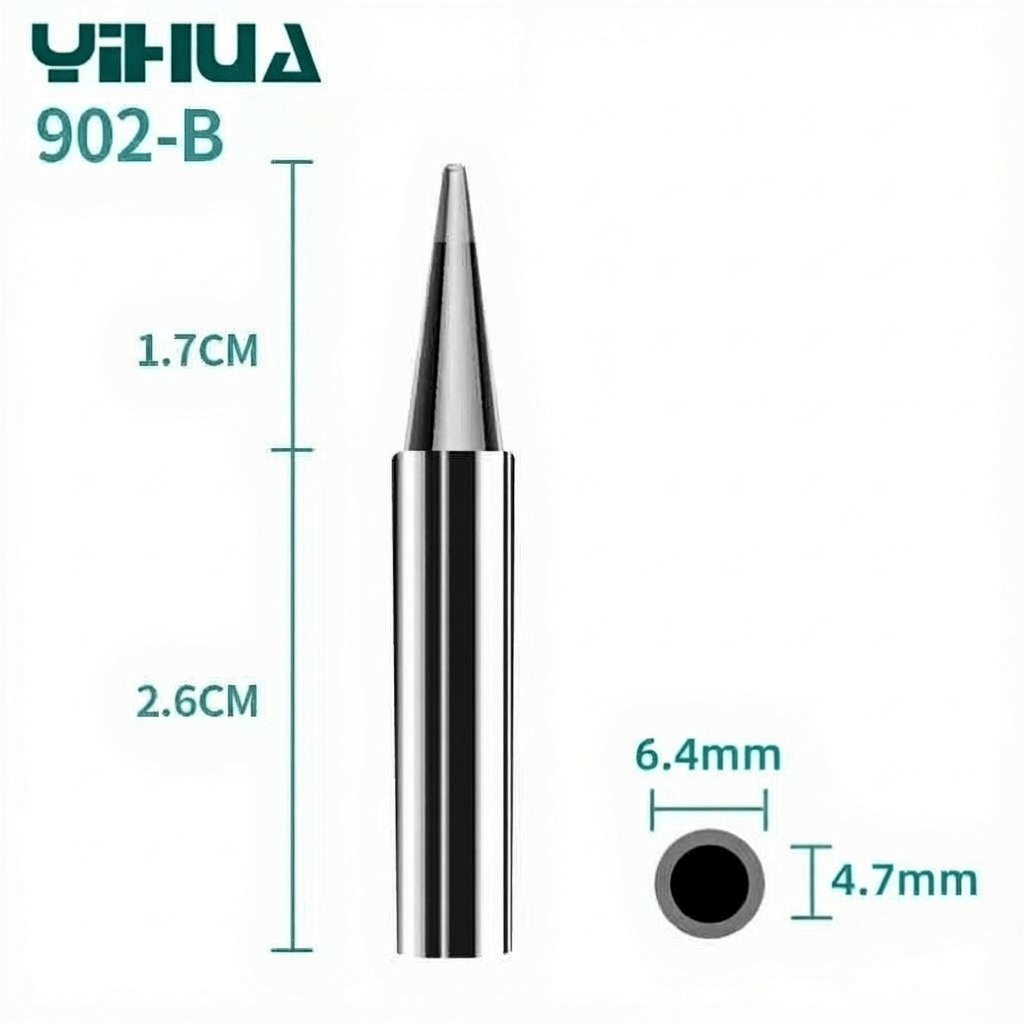
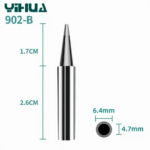
| 902-B start here | Chisel | General assembly and drag soldering, the best all-rounder |
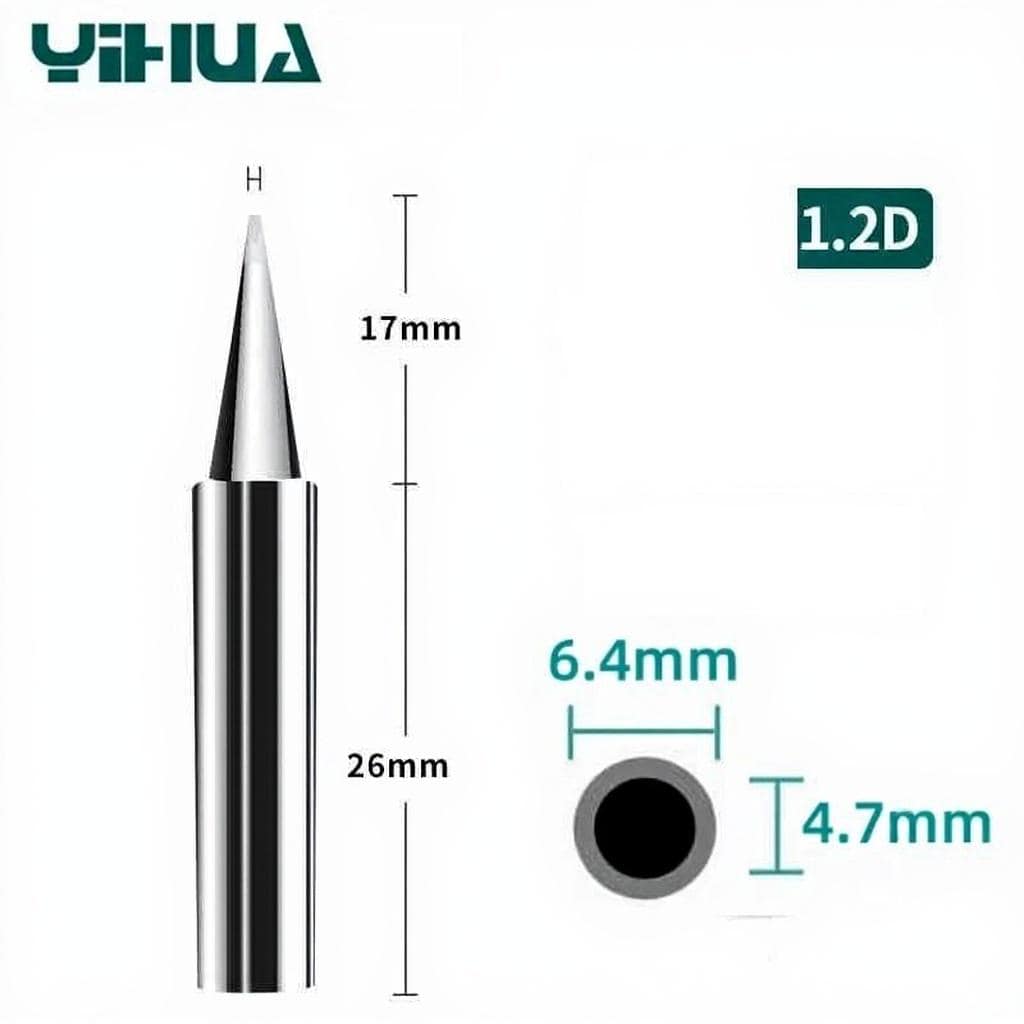
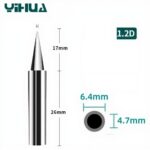
| 902-1.2D | Bevel, 1.2 mm | Small through-hole joints and fine pads |
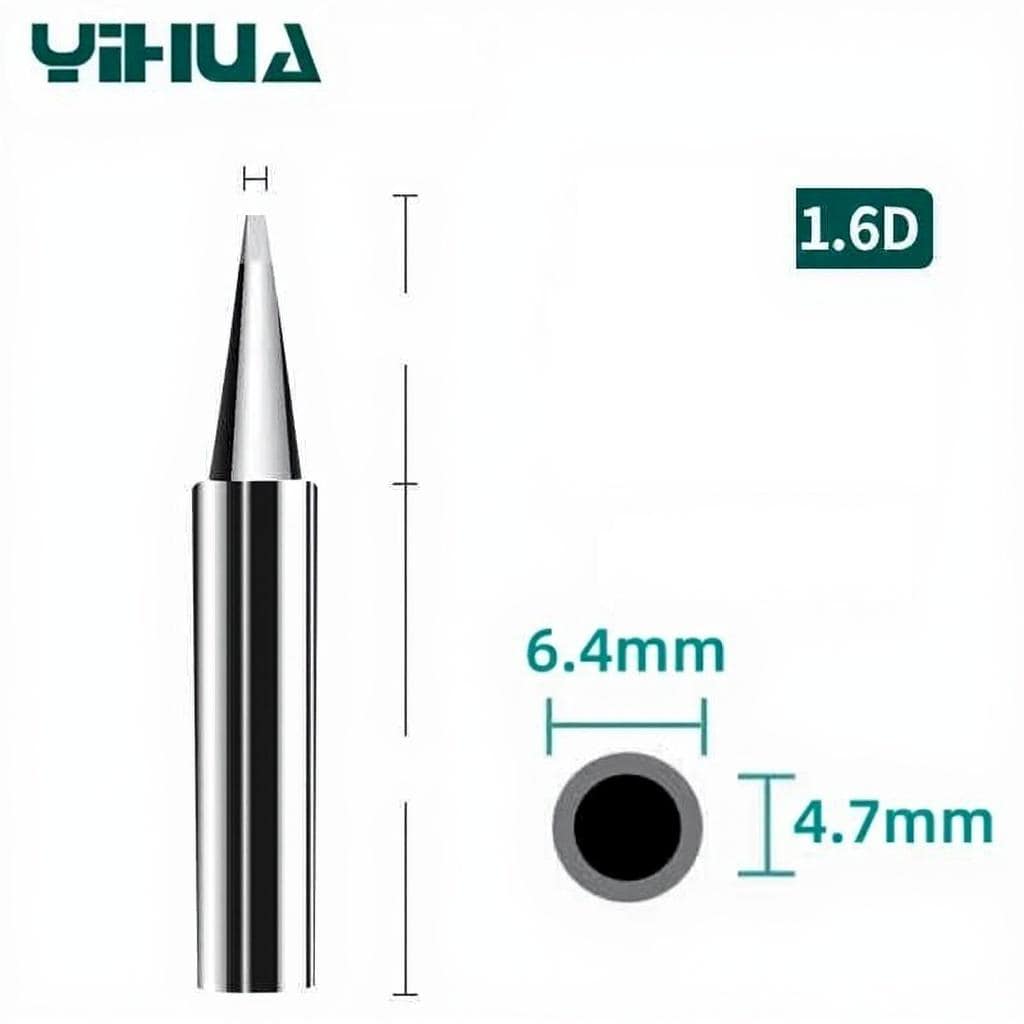
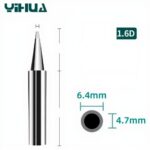
| 902-1.6D | Bevel, 1.6 mm | Standard through-hole work |
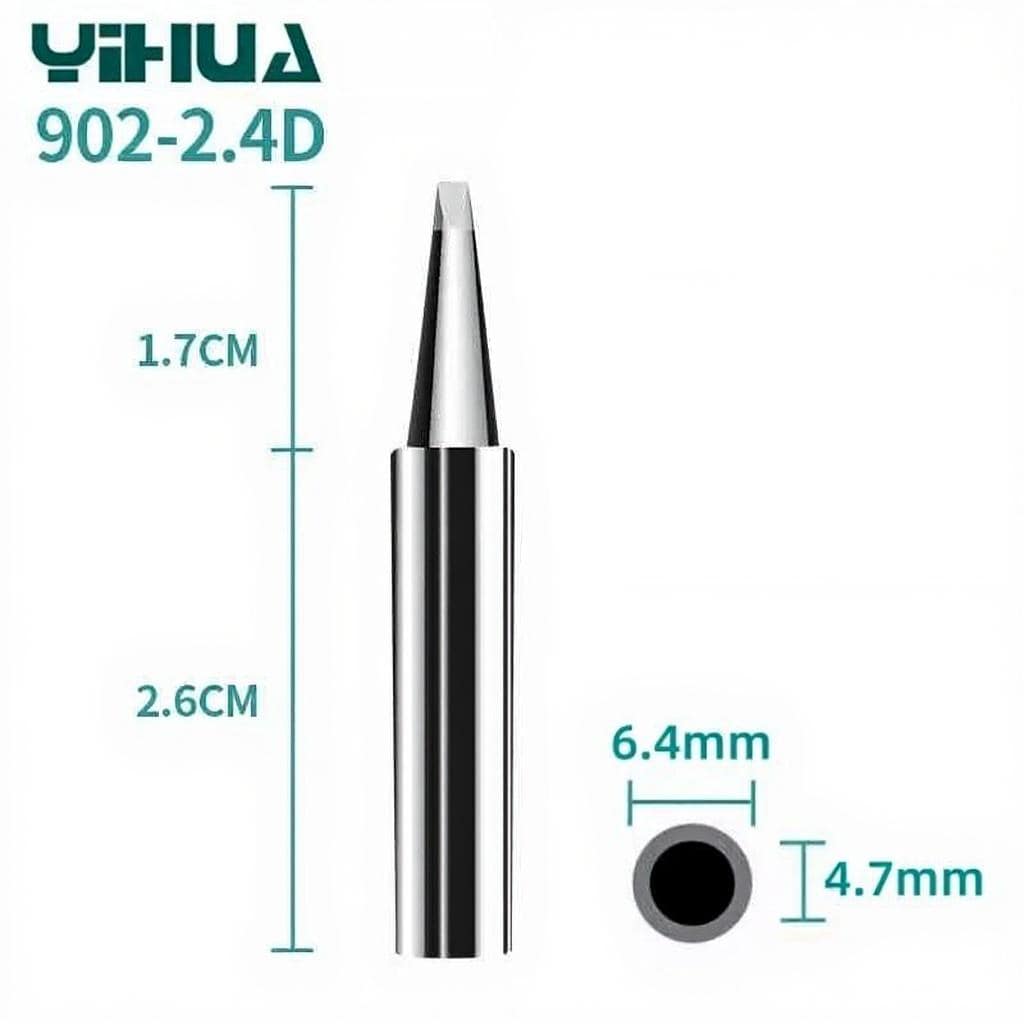
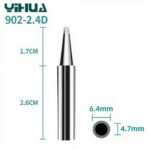
| 902-2.4D | Bevel, 2.4 mm | Larger through-hole, connector pins, wire tinning |
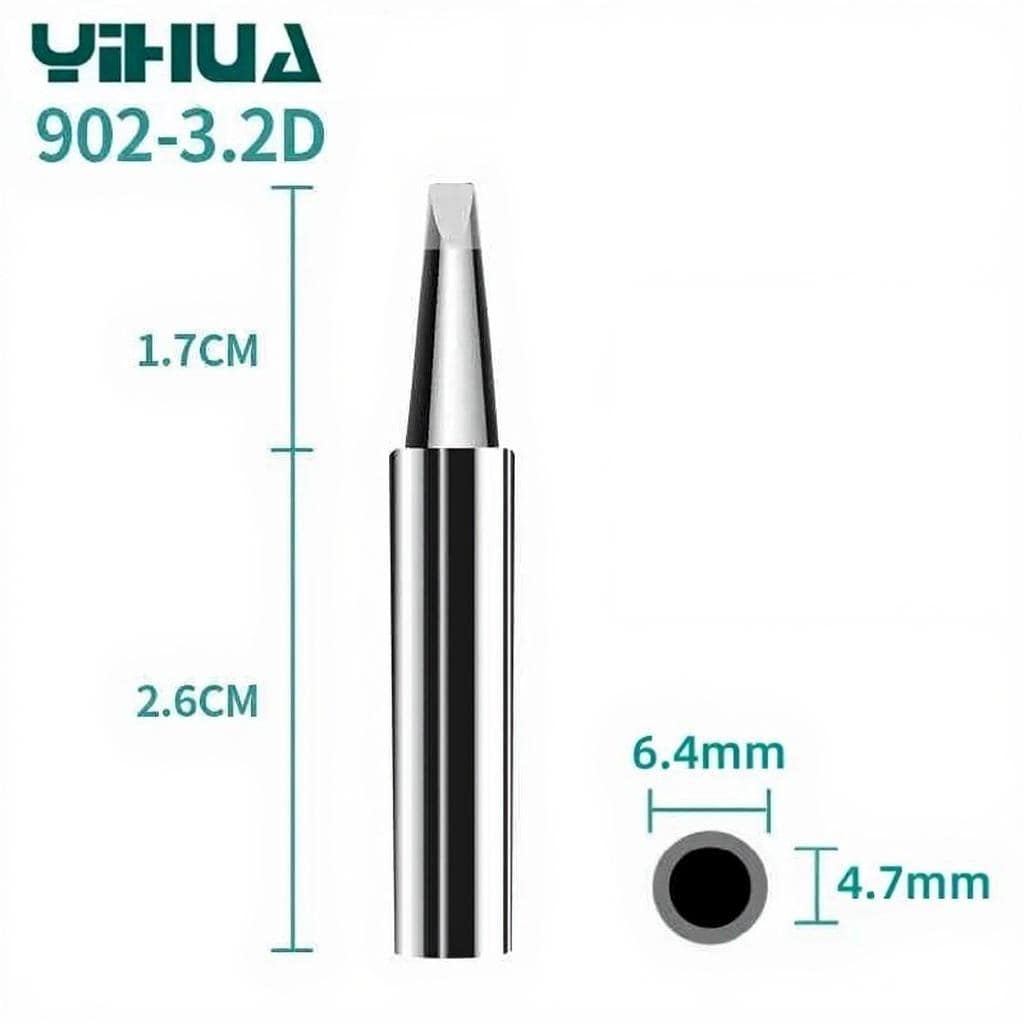
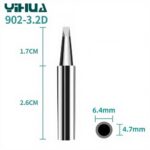
| 902-3.2D | Bevel, 3.2 mm | Heavy joints and thermally demanding pads |
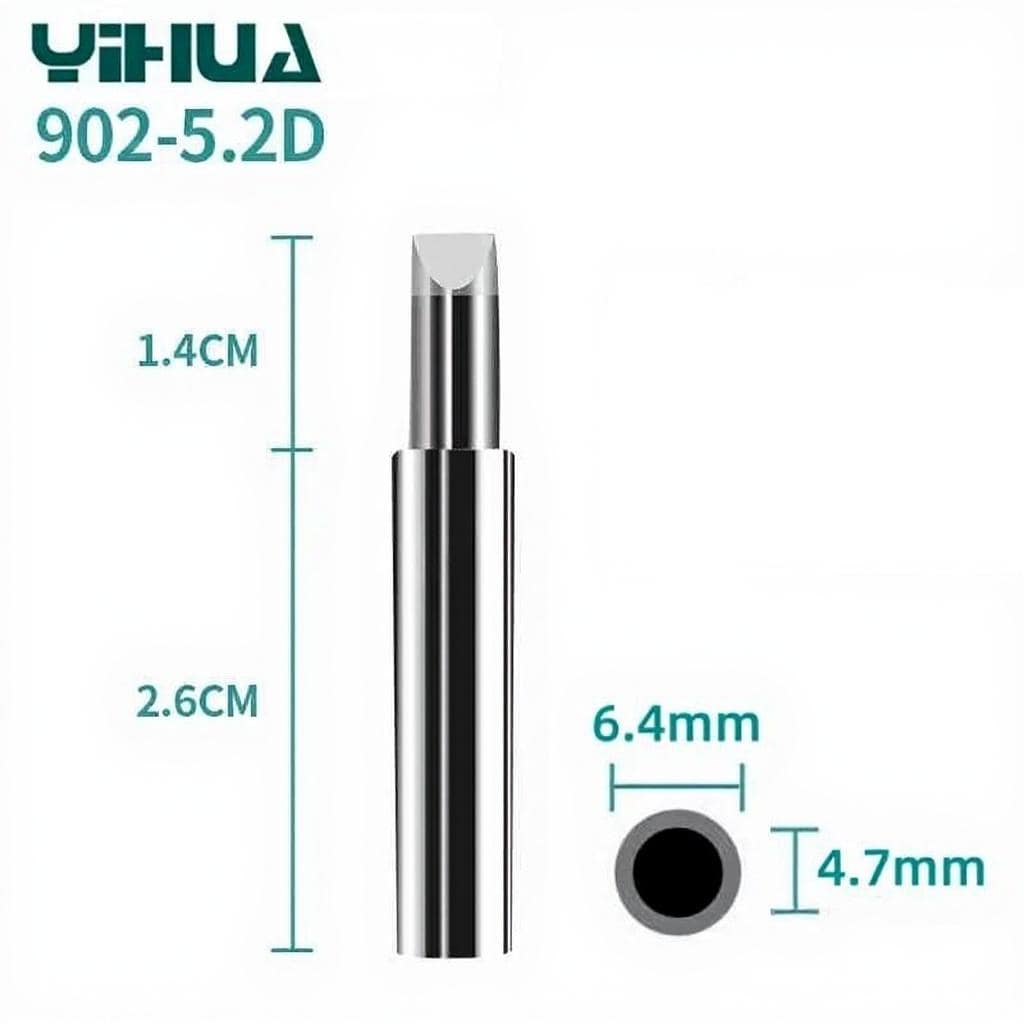
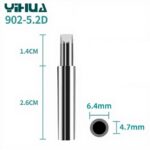
| 902-5.2D | Bevel, 5.2 mm | The heaviest work in the range, thick terminals and large pours |
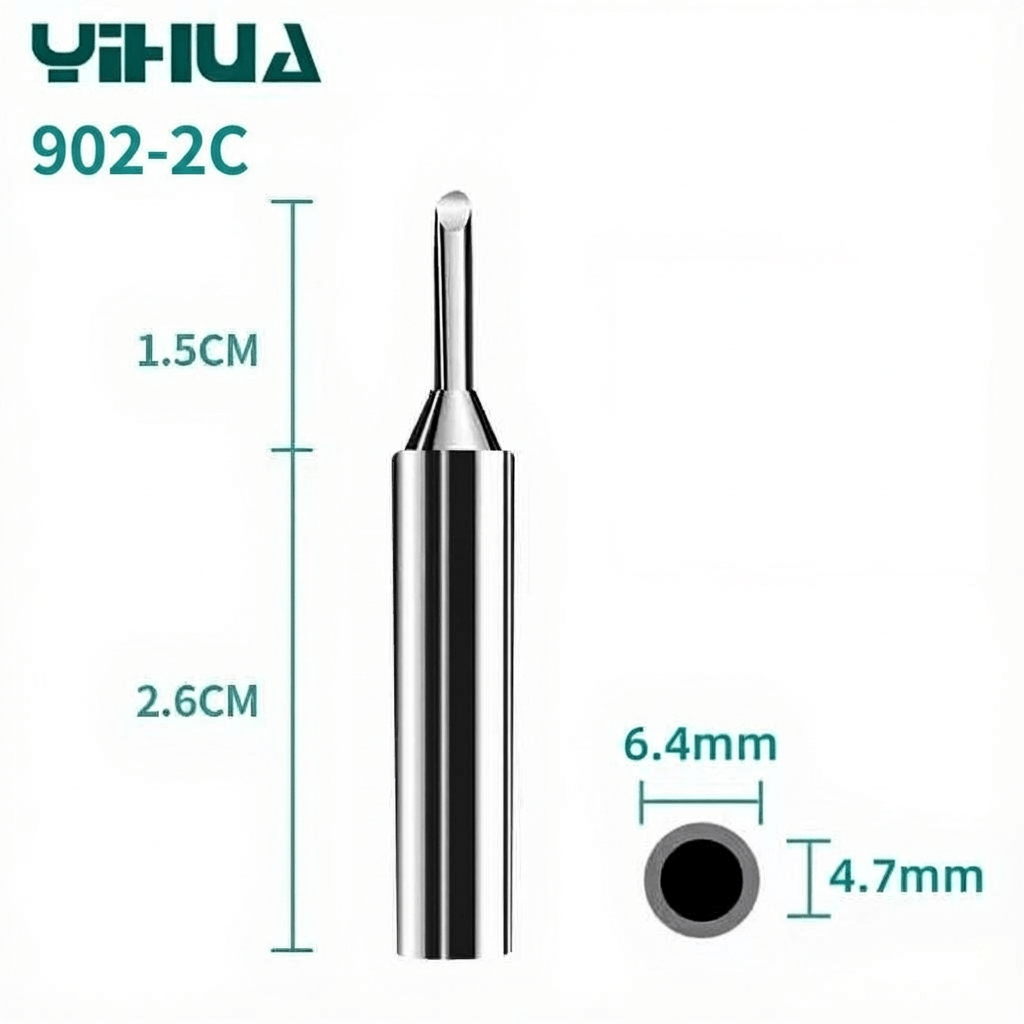
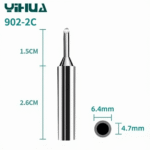
| 902-2C | Curved bevel, 2 mm | Large-area work and recessed terminals |
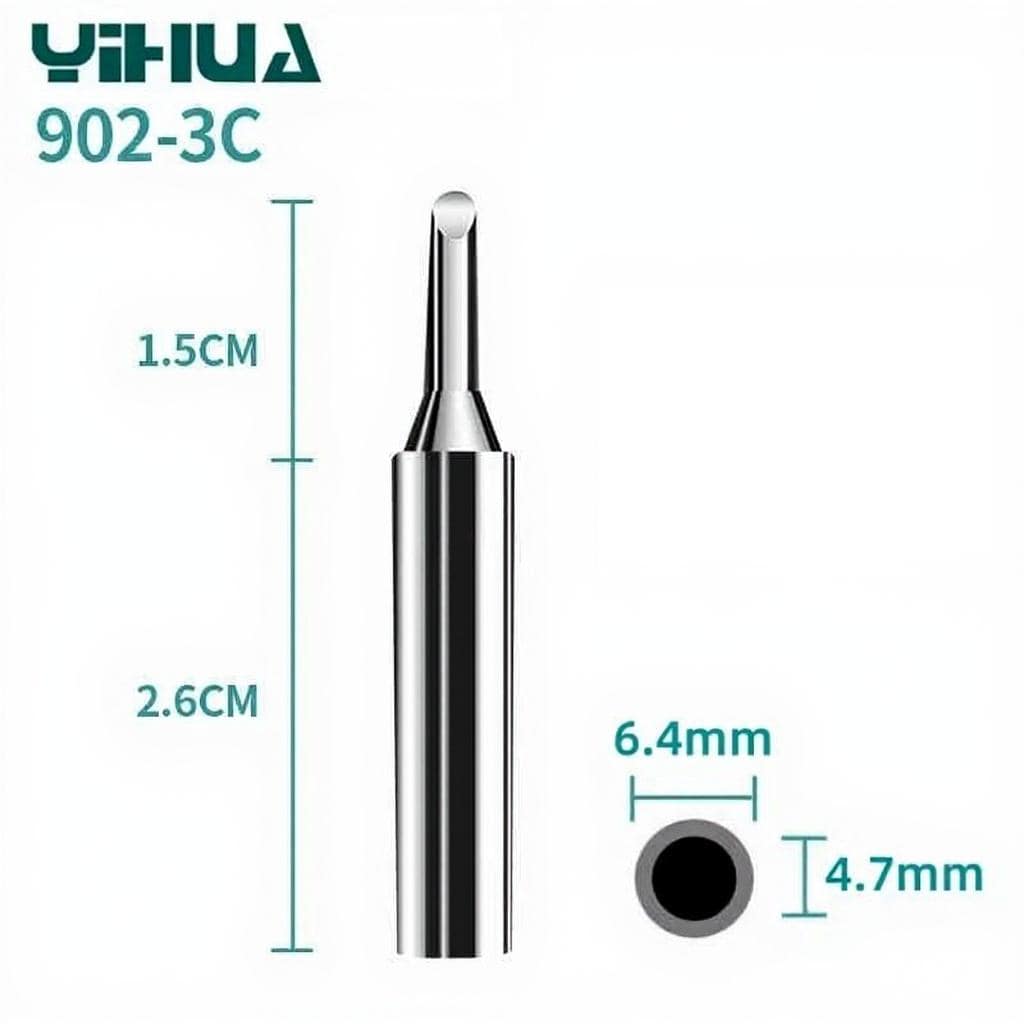
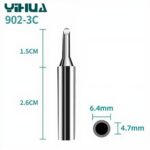
| 902-3C | Curved bevel, 3 mm | Ground planes, transformer terminals, big capacitor leads |
Buying one to start with, take the B chisel. A flat edge transfers heat evenly across a pin row and covers both through-hole and surface-mount. Add the I for fine work and a 2.4D or 3C when something refuses to take heat.
902 or 900M?
| 902 | 900M | |
|---|---|---|
| Barrel outer diameter | 6.6 mm | 6.5 mm |
| Internal bore | 5 mm | 4.1 mm |
| Thermal mass | Higher | Lower |
| Profiles stocked | 10 | 10 |
| Fits | 902-series YIHUA irons | 936-style stations, very widely |
Making Them Last
- Keep solder on the tip. Tin it once it is up to temperature and re-tin regularly. Black oxide is what kills heat transfer.
- Work at 200 to 350°C where you can. The range goes to 480°C but living up there degrades the plating for no real gain.
- Brass wool only. Never a file, never sandpaper. The iron, nickel and chrome plating is what makes the tip last, and abrasives remove it in seconds.
- Store them tinned and dry. Tips oxidise in a drawer as happily as on the bench.
Specifications
| Specification | Details |
|---|---|
| Tip format | YIHUA 902-series |
| Overall length | 40 mm |
| Insertion depth | 25 mm |
| Barrel outer diameter | 6.6 mm |
| Internal bore | 5 mm |
| Core material | Oxygen-free copper, around 400 W/m·K |
| Plating | Iron for wear, nickel for oxidation, chromium for hardness |
| Operating temperature | 200°C to 480°C |
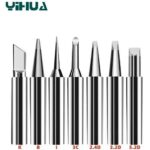
| Profiles stocked | I, K, B, 1.2D, 1.6D, 2.4D, 3.2D, 5.2D, 2C, 3C |
| Sold | Individually |
Frequently Asked Questions
Are 902 and 900M tips interchangeable?
No. The internal bore is 5 mm on the 902 and 4.1 mm on the 900M, so they do not swap. Measure your heating element barrel before ordering. If it takes a 4.1 mm tip you want the 900M-T range instead, which is the more common format across 936-style stations.
Which 902 tip should I buy first?
The 902-B chisel. A flat edge spreads heat evenly across a row of pins and handles both through-hole and surface-mount, which covers most general electronics. Add the I for fine work and a 2.4D or 3C for anything with real thermal mass behind it.
What do the numbers in 1.2D, 2.4D and 5.2D mean?
The width of the working face in millimetres. Match it roughly to the pad size. A wider face carries more heat and holds more solder, which is what a big joint needs and what a fine one does not.
Why choose 902 over a thinner tip format?
Thermal mass. The 6.6 mm barrel puts more copper behind the working face, so the tip holds its temperature better under load. That matters for lead-free solder, for stained glass work and for anything tied to a large copper pour, where a thinner tip cools faster than you can work.
How long do they last?
It depends almost entirely on care. Keep them tinned, work at 200 to 350°C rather than at maximum, and clean on brass wool only. One pass with a file or sandpaper takes the plating off and the copper underneath oxidises immediately.