

Fume Extractor For Soldering Station
Browse our solder fume extractors below, all in UK stock, and see the buying guide further down the page if you are not sure what to look for.
They pair naturally with a temperature-controlled soldering station.
Showing the single result
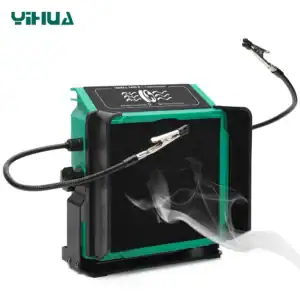
Showing the single result
A solder fume extractor pulls the smoke away from your face while you work. That smoke is not lead, it is vaporised flux (rosin/colophony), and breathing it in regularly is a known cause of occupational asthma. If you solder for more than a few minutes at a time, extraction is the cheapest piece of safety kit you can own.
Why you need a fume extractor
When solder melts, the flux inside the wire burns off as the visible white smoke that drifts straight up toward you. Rosin flux fumes irritate the eyes, nose and airways, and repeated exposure can trigger asthma and sensitisation. A fume extractor sits beside the work and draws that smoke through a filter before it reaches your lungs, the single biggest improvement most hobby benches can make.
What to look for
- Activated carbon filter: rosin fumes are gaseous, so you want an activated-carbon filter (often with a particulate pre-filter) rather than fans alone. Check that replacement filters are available.
- Enough airflow: for a single bench iron a compact unit is fine; the key is positioning it close to the joint, within 15 to 20cm, where it can actually catch the plume.
- Bench-top vs arm: a flat bench-top extractor suits general hobby work; a flexible arm or hood is better if you move around the board a lot.
- ESD-safe build: if you work on sensitive electronics, choose an ESD-safe housing so the unit does not introduce static.
- Noise: you will run it for long sessions, so quieter is better.
Getting the most from it
Position matters more than raw power. Place the intake just to the side of and slightly behind the joint so rising smoke is pulled across the filter, not past your face. Keep the filter clean and replace the carbon when fumes start to get through. Extraction works best alongside good bench habits, see how to clean soldering iron tips and the right consumables in Soldering Wire.
Part of a safe, capable bench
A fume extractor pairs with a temperature-controlled station and the right tips to make soldering both safer and cleaner. New to the gear? Start with our soldering station buying guide and the Soldering Iron Tips range.
Solder fume extractor FAQ
Are soldering fumes actually dangerous?
The fumes are vaporised rosin flux, not lead. Lead does not vaporise at soldering temperatures, but rosin flux fumes can irritate your airways and, with repeated exposure, cause occupational asthma. Extraction and ventilation are strongly recommended.
Does a fume extractor remove lead?
There is no lead vapour to remove, the health risk from the smoke is the flux. A carbon-filter extractor handles the flux fumes; wash your hands after handling leaded solder to deal with the lead itself.
What kind of filter do I need?
An activated-carbon filter, usually with a particulate pre-filter. Plain fans just move the smoke around; carbon actually adsorbs the rosin fumes.
Where should I position the extractor?
Close, within about 15 to 20cm of the joint, and slightly to the side so rising smoke is drawn across the filter rather than past your face.
Do I still need ventilation if I use an extractor?
Yes, treat the extractor as your first line and work in a ventilated room as well. The two together keep exposure low during long sessions.
Related
Soldering Wire ·
Soldering Iron Tips ·
Soldering Supplies & Spares ·
Best Soldering Stations UK 2026