


YIHUA 902-series soldering iron tips are high-wattage replacement components engineered for professional soldering stations requiring enhanced thermal mass and heat transfer capacity. These tips use a 6.6mm outer diameter barrel, distinguishing them from the narrower 900M-series, and are designed for demanding applications including lead-free soldering, stained glass work, and high-density PCB assembly.
Core Specifications for All 902-Series Tips
Every tip in the 902 range shares standardised dimensional and material properties that ensure interchangeability across compatible YIHUA stations.
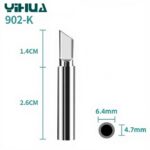
The overall length measures 40mm with a 25mm insertion depth into the heating element. The barrel outer diameter is 6.6mm, while the internal bore measures 5mm.
Construction uses an oxygen-free copper core, selected for its thermal conductivity rating of approximately 400 W/m·K. This core receives multi-layer electroplating consisting of iron for wear resistance, nickel for oxidation protection, and chromium for surface hardness.
The operating temperature range spans 200°C to 480°C, with optimal performance for lead-free solders such as SAC305 occurring between 300°C and 380°C.
Compatible YIHUA Soldering Stations
The 902-series barrel dimensions match the heating element specifications of several YIHUA models.
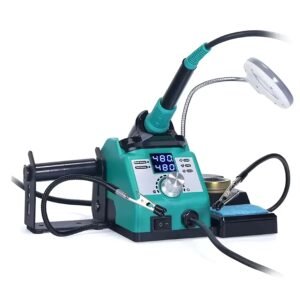
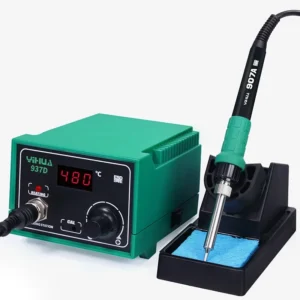
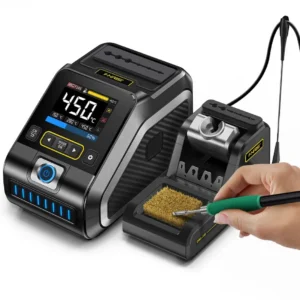
Compatible stations include the YIHUA 948-III, YIHUA 948D-III, YIHUA 938BD-I, YIHUA 995D-I, YIHUA 939D-IV 110W variant, YIHUA 939D-IV 90W variant, and YIHUA 948DQ-III.
These stations deliver between 90W and 110W to the heating element, requiring the larger thermal mass provided by 902-series geometry compared to lower-wattage alternatives.
D-Series Chisel Tips
Chisel-profile tips provide a flat contact surface ideal for transferring heat across component leads and solder pads simultaneously. The D-series designation indicates a straight-cut chisel geometry.
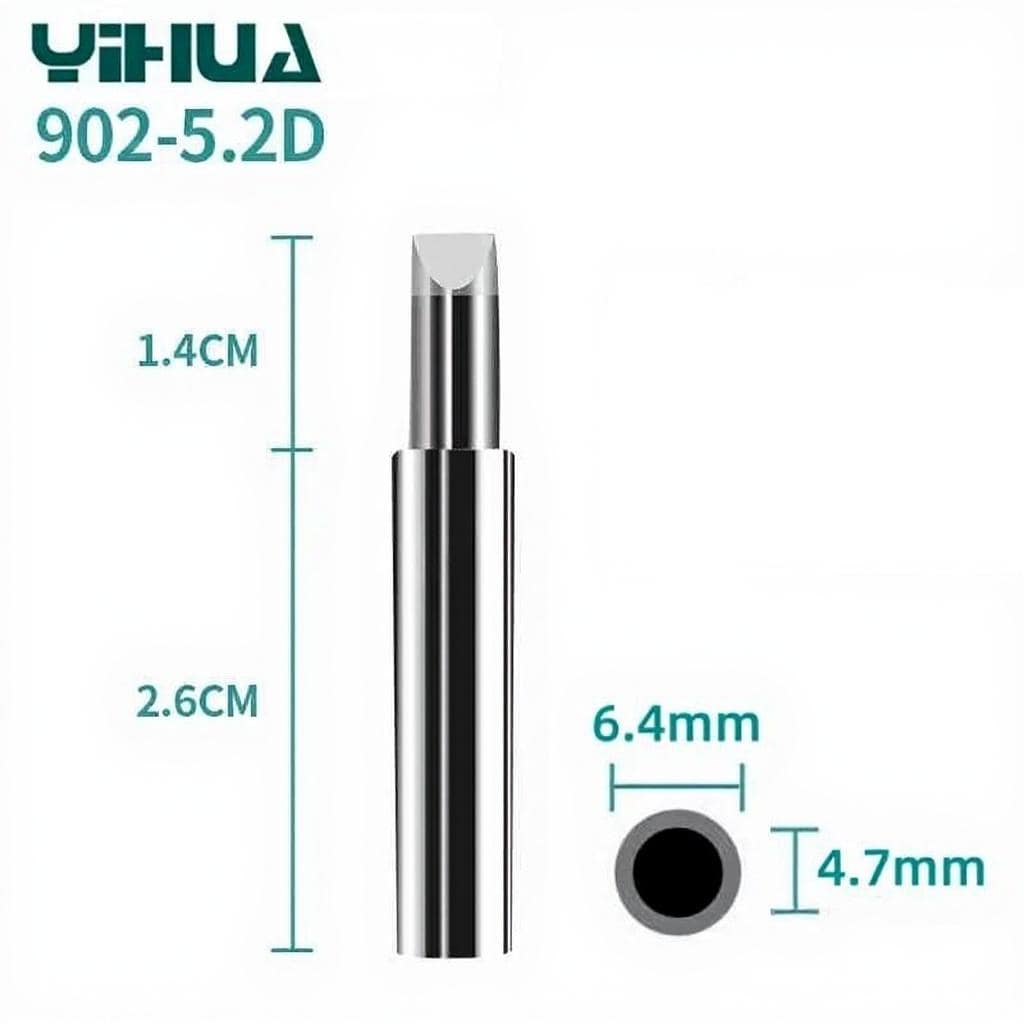
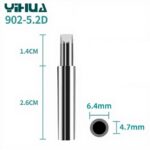
902-5.2D
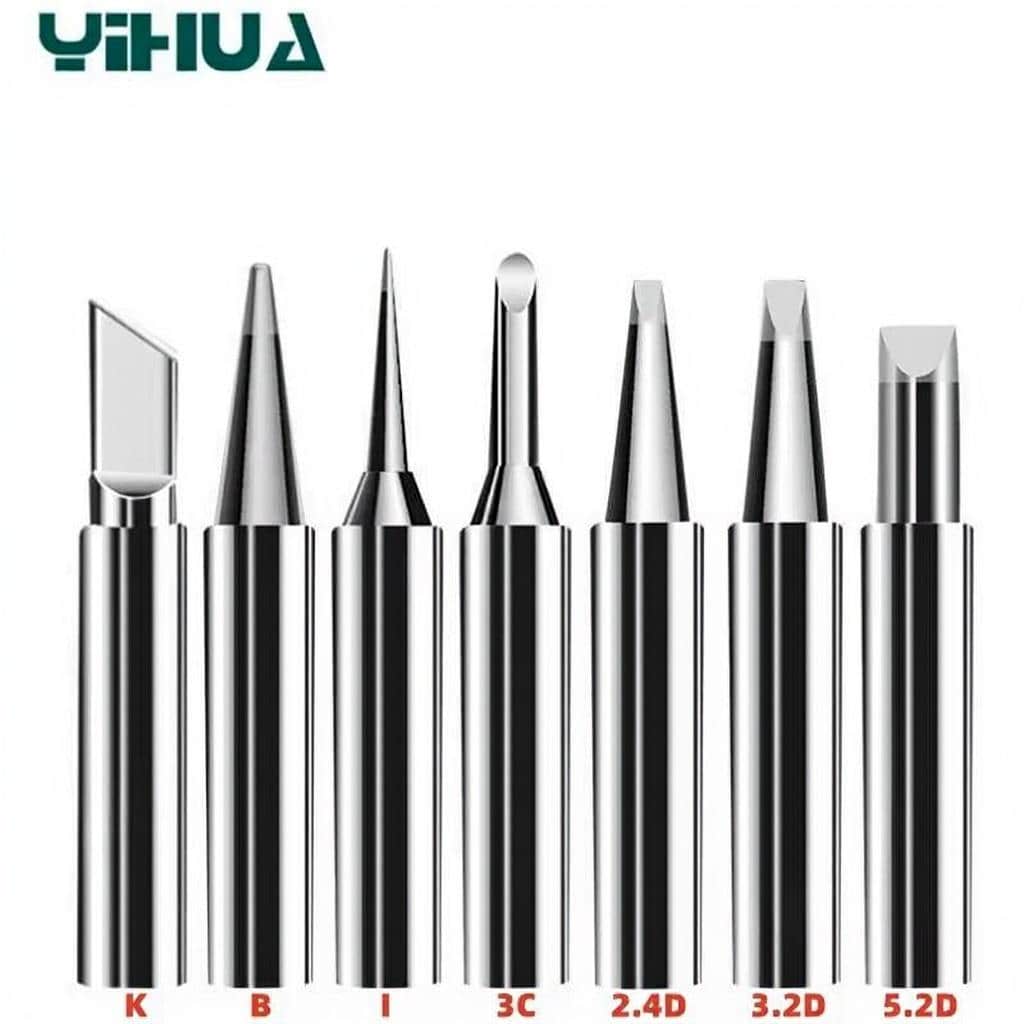
The 902-5.2D features a 5.2mm wide chisel face, the largest in the series. This broad contact area suits heavy-duty applications including stained glass foil soldering, high-gauge wire splicing, and through-hole components with substantial thermal requirements such as large electrolytic capacitors, potentiometers, and toggle switches.
Weight measures approximately 6g, reflecting the increased copper volume necessary for sustained heat delivery during extended joint formation.
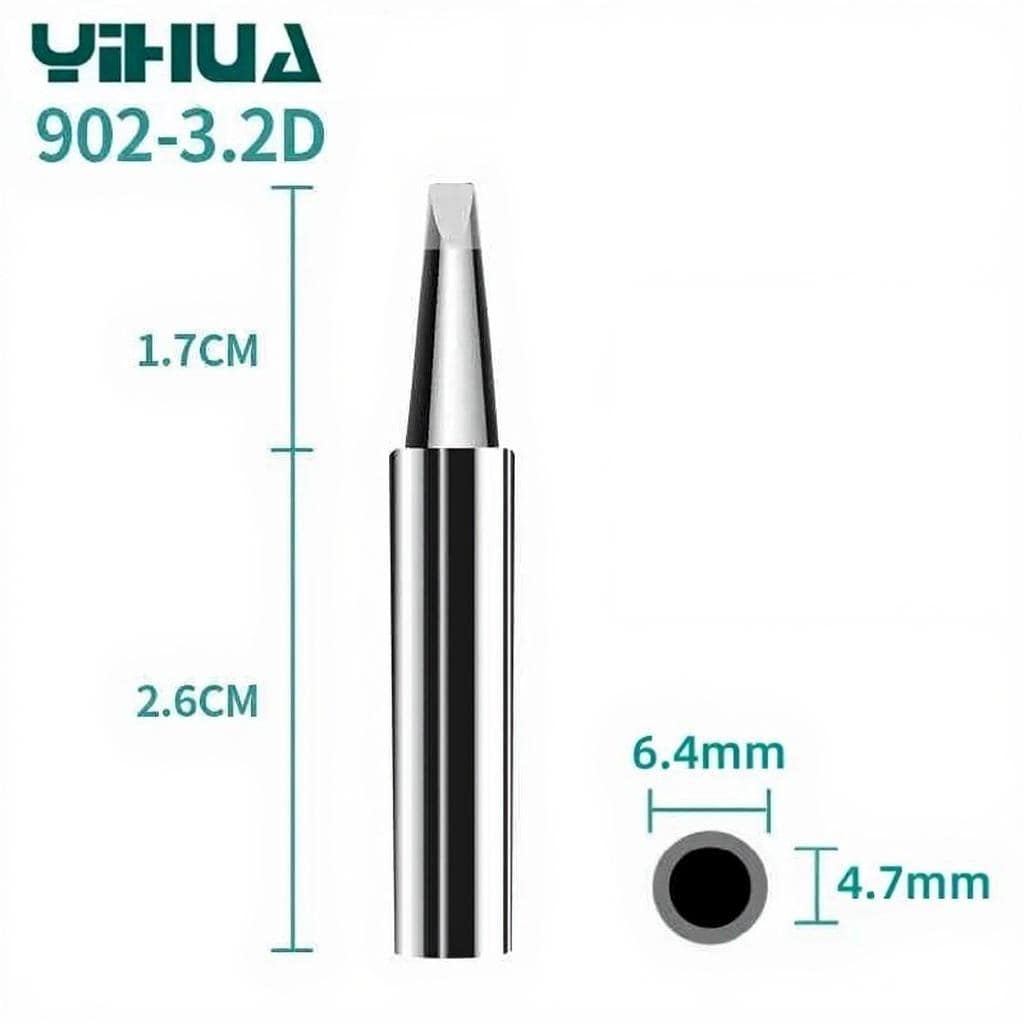
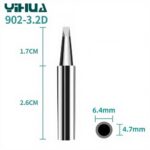
902-3.2D
The 902-3.2D provides a 3.2mm chisel width suited to general-purpose through-hole soldering. This size handles standard component leads, wire tinning, and pad preparation effectively.
At 6g, the thermal mass supports continuous work without frequent temperature recovery pauses.
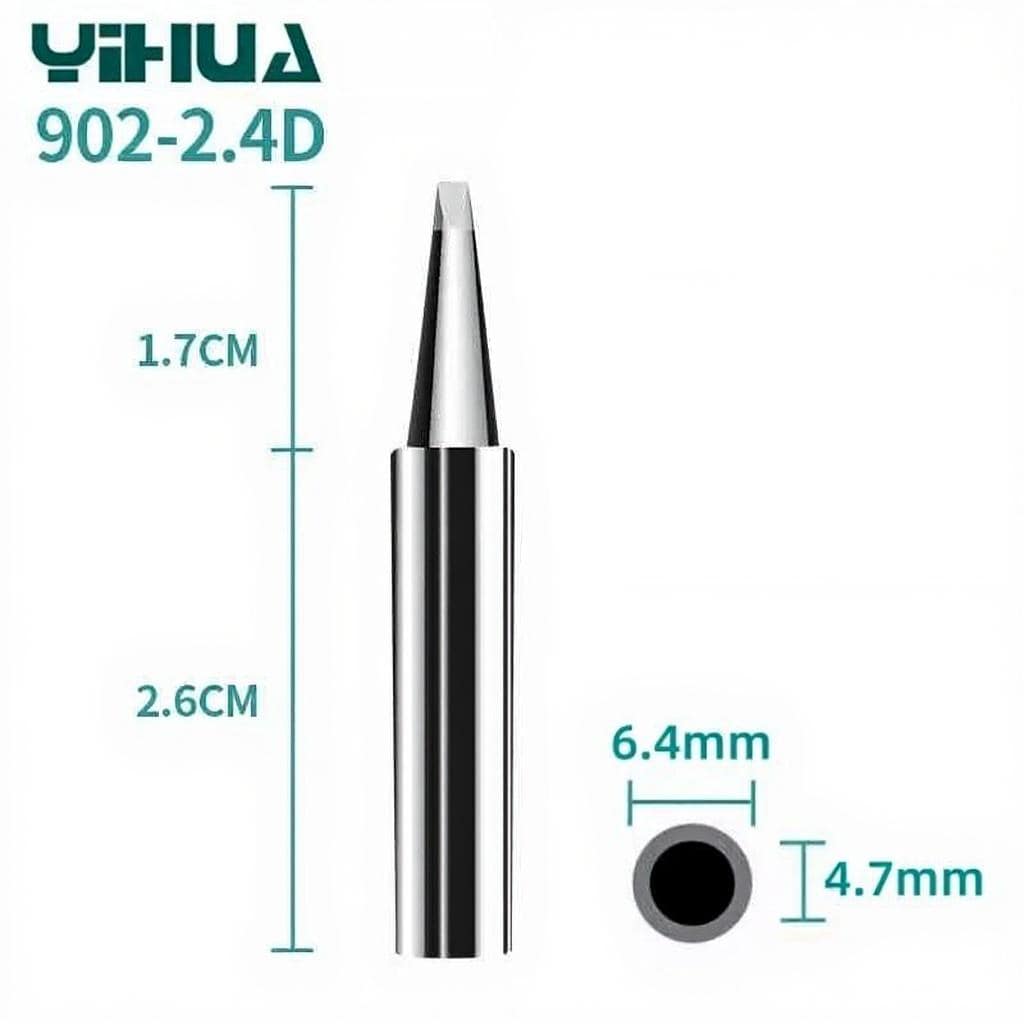
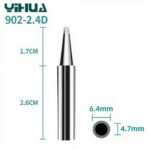
902-2.4D
The 902-2.4D narrows to 2.4mm, balancing precision against thermal capacity. This width suits medium-pitch through-hole components and provides adequate contact area for most PCB repair tasks.
Weight reduces to approximately 4.8g, improving handling for detailed work.
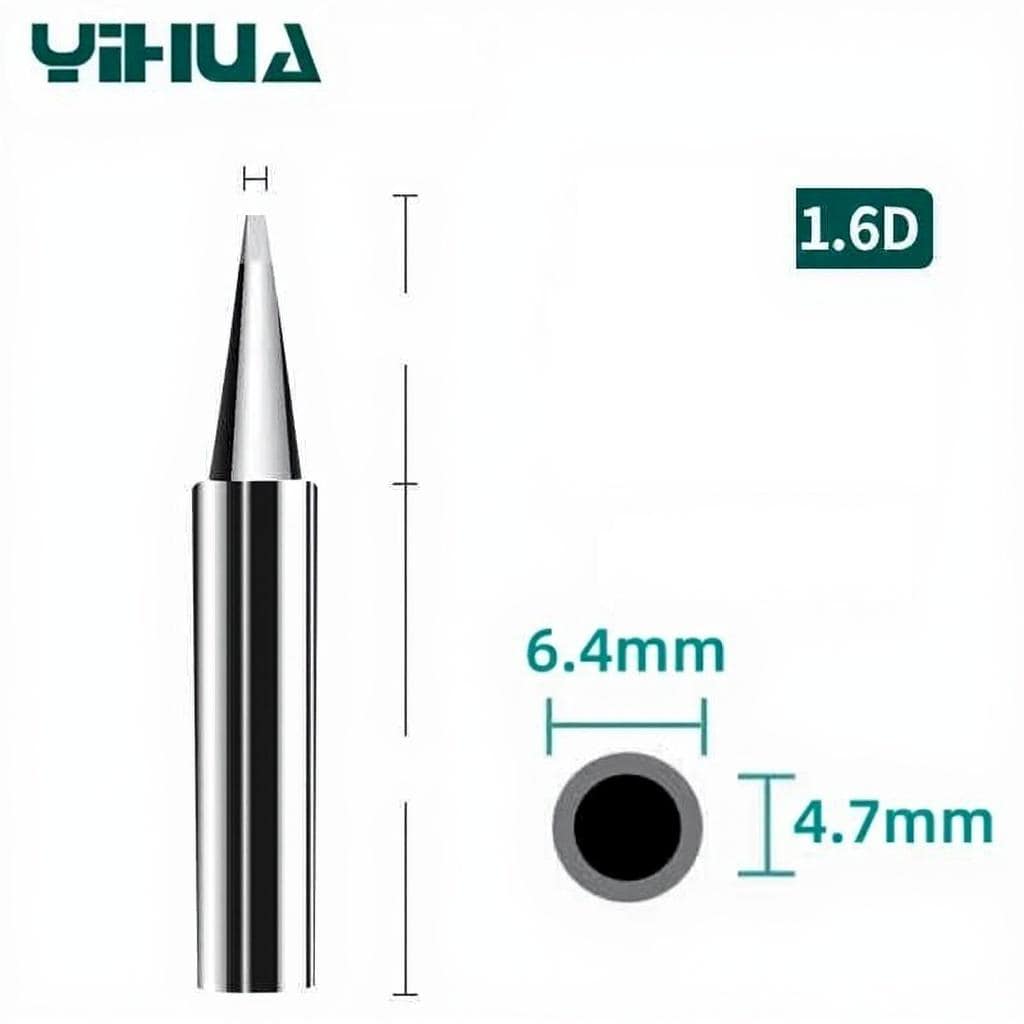
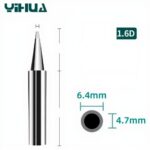
902-1.6D
The 902-1.6D chisel measures 1.6mm across, enabling work on fine-pitch components while retaining sufficient thermal mass for efficient heat transfer.
This size bridges the gap between general-purpose and precision applications.
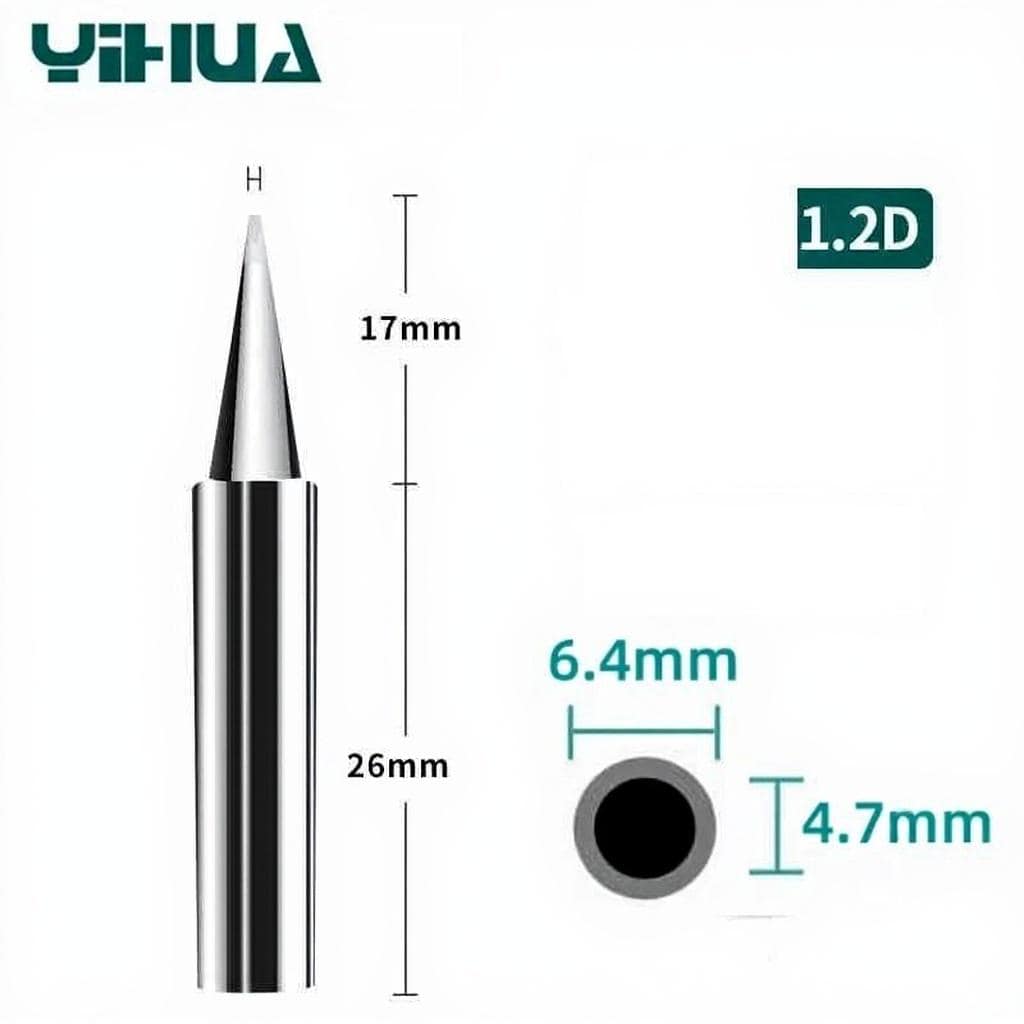
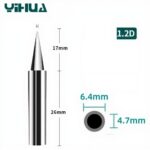
902-1.2D
The 902-1.2D is the narrowest chisel option at 1.2mm width. Applications include small SMD passive components, fine-pitch leaded ICs, and rework tasks requiring controlled solder application.
C-Series Bevel Tips
Bevel tips feature a 45-degree angled cut across the tip face. This geometry creates a sharp edge useful for drag soldering techniques and solder bridge removal.
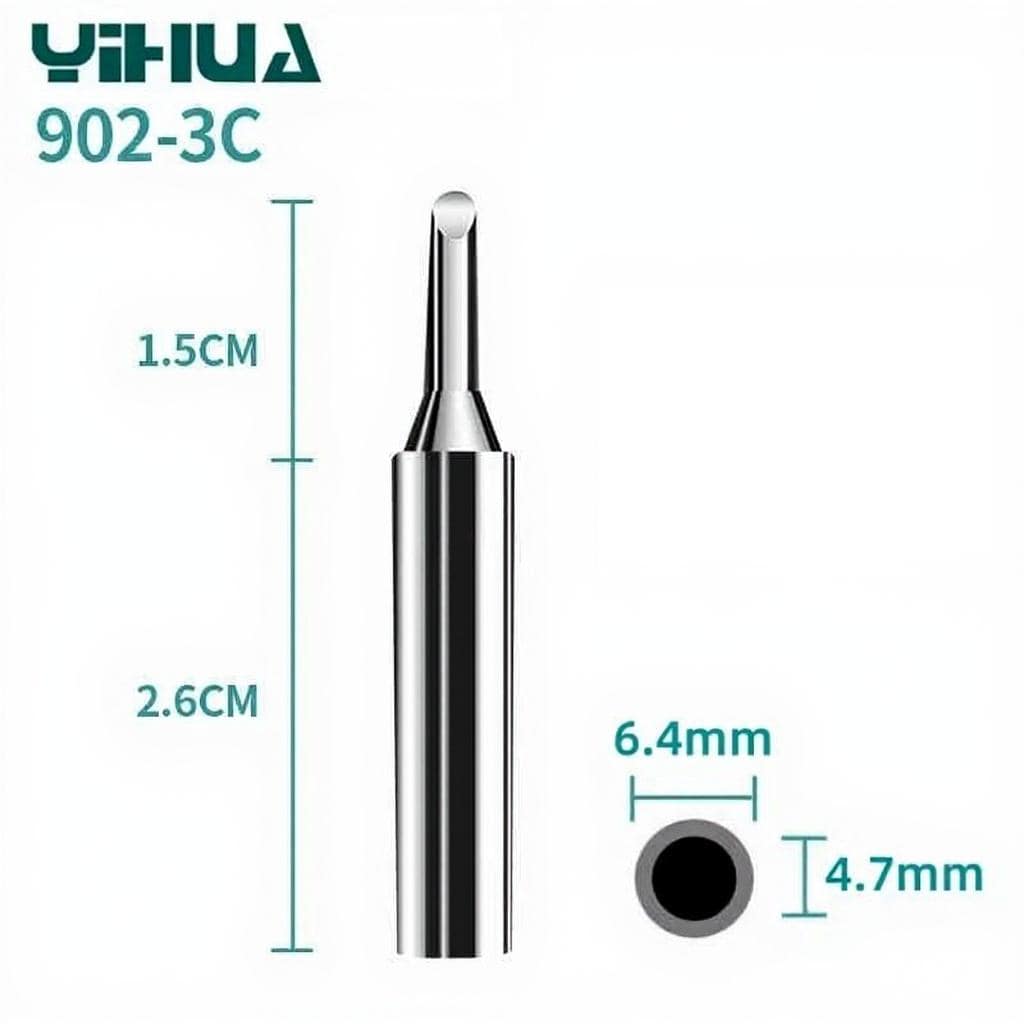
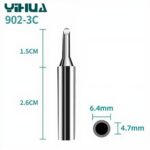
902-3C
The 902-3C combines a 3mm face width with the characteristic bevel angle. Primary applications include drag soldering of SOIC and TSSOP packages, where the angled edge draws solder along multiple pins in sequence.
The geometry also assists in surface preparation and controlled desoldering of through-hole joints.
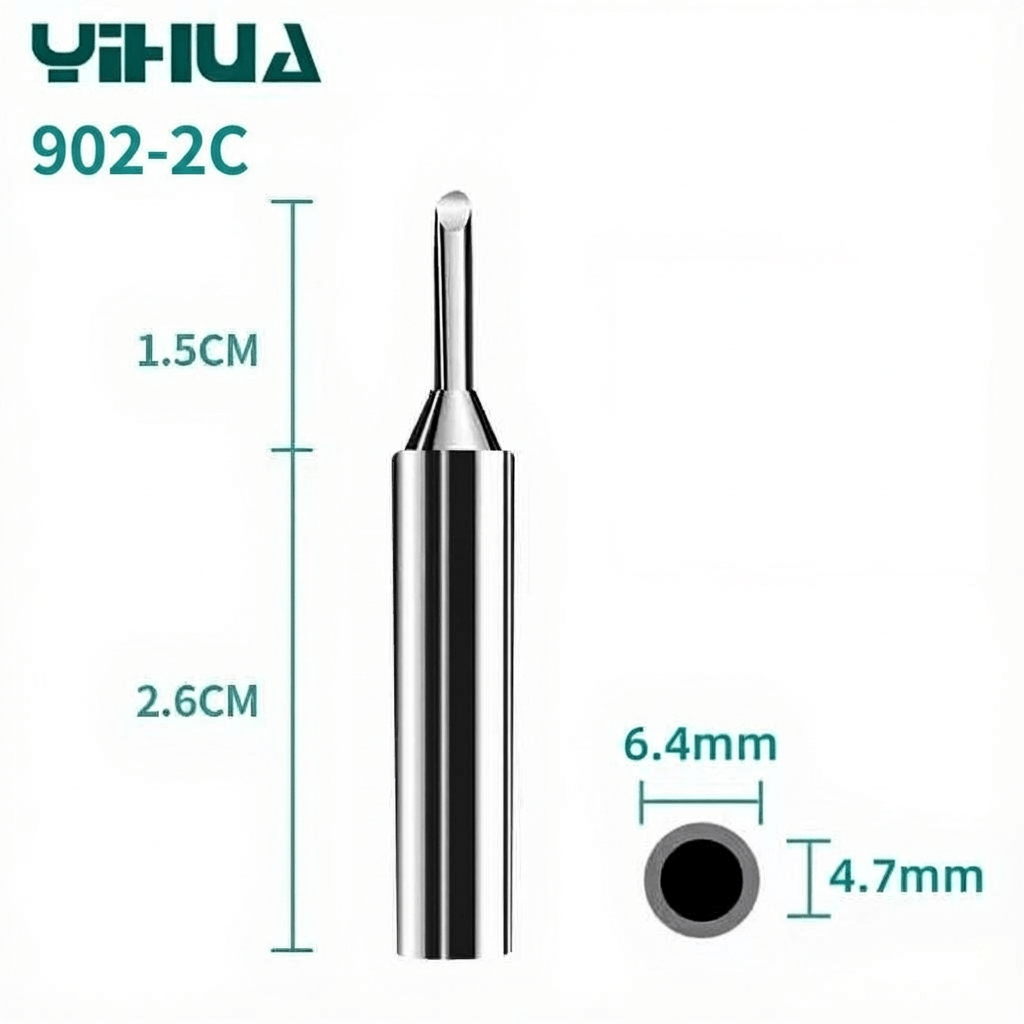
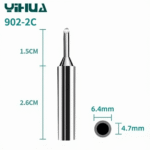
902-2C
The 902-2C reduces the face to 2mm, improving access in constrained board layouts. This size handles QFP packages and other medium-pitch surface-mount devices requiring precision solder placement.
902-1C
The 902-1C provides the finest bevel option at 1mm width. Ultra-precision applications include fine-pitch QFN rework and delicate interconnect soldering.
Specialty Tip Profiles
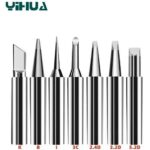
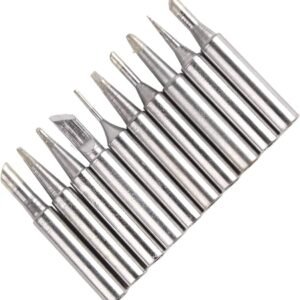
Beyond chisel and bevel geometries, the 902-series includes conical, needle, and knife profiles for specialised techniques.
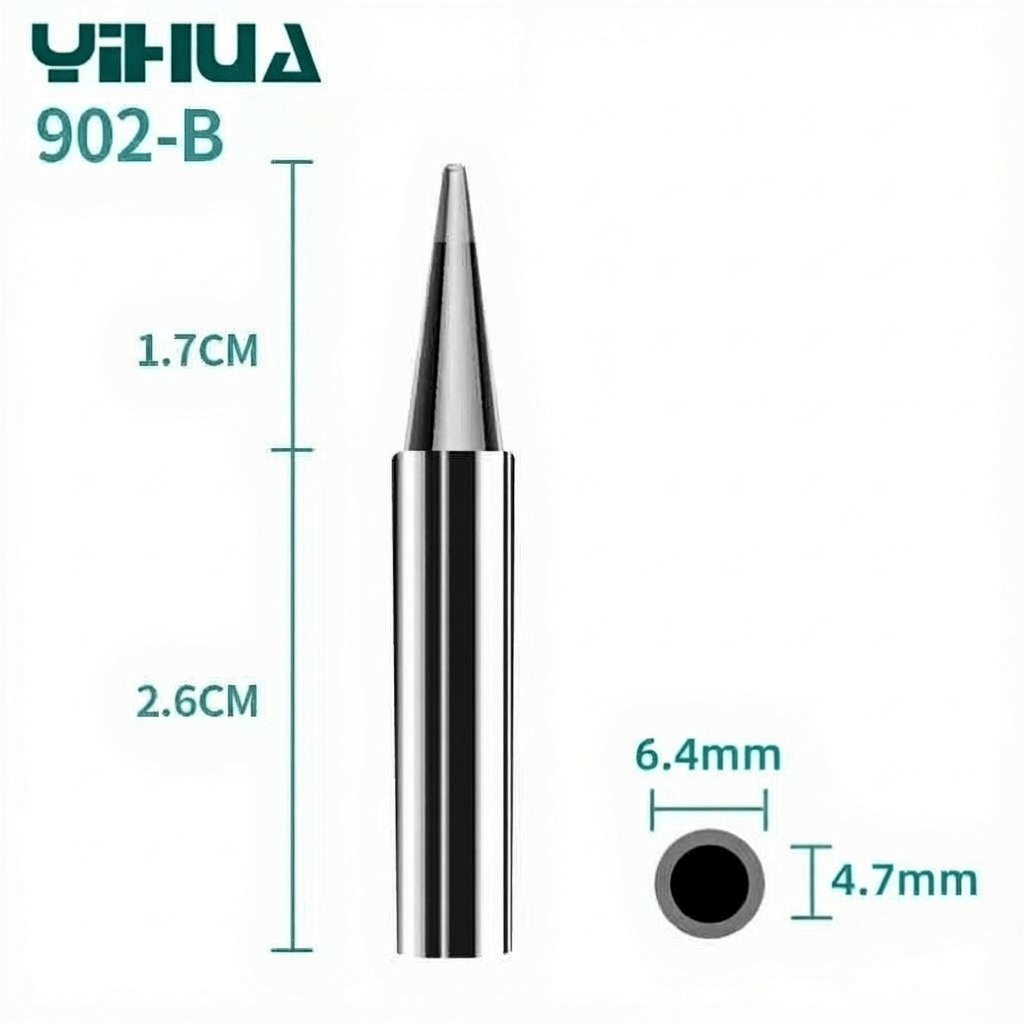
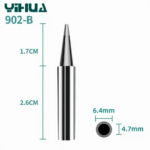
902-B Conical Tip
The 902-B features a cone-shaped point suitable for general-purpose through-hole soldering where approach angle varies frequently. The rounded profile contacts component leads regardless of orientation, making it effective for point-to-point wiring and prototype assembly.
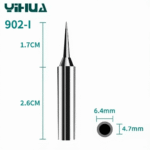
902-I Needle Tip
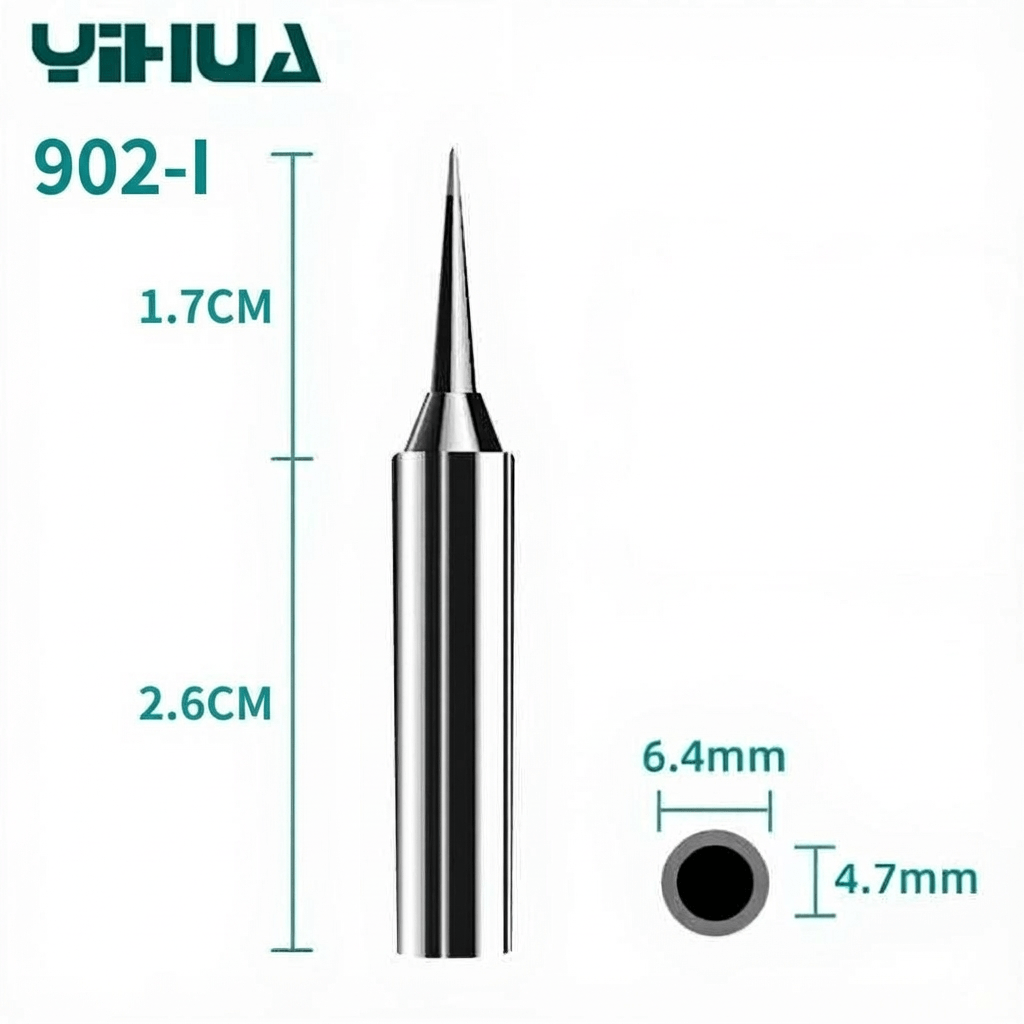
The 902-I uses an ultra-fine needle profile measuring approximately 0.5mm at the point. At 3.7g, this is the lightest tip in the series.
Applications centre on micro-component work including 0603-size and smaller passive devices, high-density smartphone PCB repair, and fine-pitch BGA rework requiring precise solder placement.
The 40mm overall length provides reach into confined enclosures common in mobile device assembly.
902-K Knife Tip
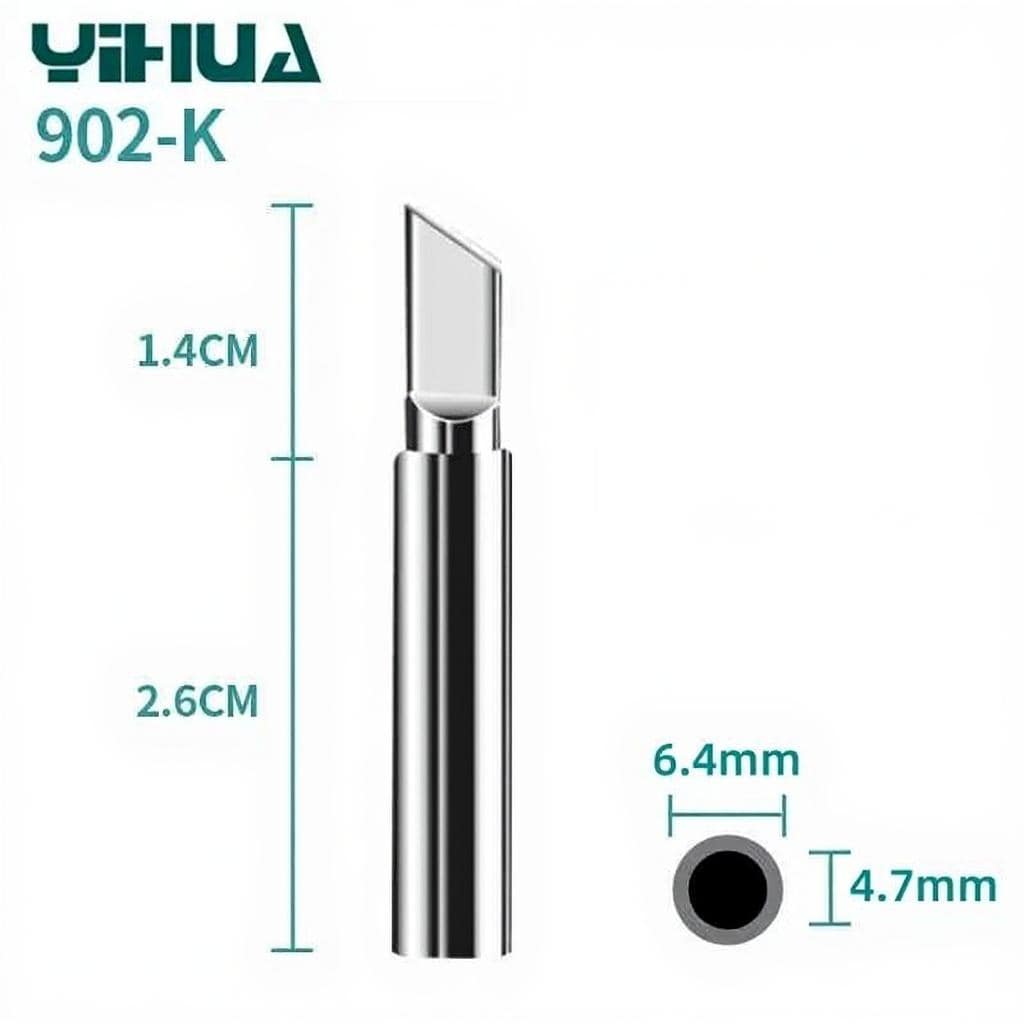
The 902-K features a blade-shaped profile sometimes called a hoof tip. The asymmetric geometry excels at solder bridge removal, pad cleaning, and controlled component removal through directed heat application.
This profile is commonly used in conjunction with solder wick for rework procedures.
902-Series vs 900M-Series: Key Differences
The 902-series serves a distinct market segment from the widely available 900M-series tips.
Barrel diameter differs by 0.2mm, with 902-series measuring 6.6mm against 6.4mm for 900M-series. This prevents cross-compatibility between series.
Power handling capacity scales accordingly. The 902-series suits stations delivering 90W to 110W, while 900M-series tips pair with 50W to 60W stations.
Thermal mass in 902-series tips exceeds 900M equivalents due to the larger copper core volume. This improves performance on joints with high thermal demand, including thick copper planes, large component bodies, and lead-free alloys requiring elevated temperatures.
Commercial availability differs substantially. The 900M-series dominates retail channels due to widespread compatibility with entry-level stations. The 902-series remains primarily available through Chinese suppliers and specialist distributors serving professional users.
Material Science and Construction
The construction methodology directly affects tip longevity and heat transfer efficiency.
Oxygen-free copper forms the core, chosen because impurities in standard copper reduce thermal conductivity and create oxidation nucleation sites. The resulting core approaches the theoretical maximum conductivity for copper.
Iron plating over the copper provides a wear-resistant working surface. The iron layer resists abrasion from cleaning and solder contact while maintaining adequate thermal conductivity.
Nickel plating between iron and chromium layers inhibits oxidation migration. This barrier extends tip life by preventing iron oxidation from progressing inward toward the copper core.
Chromium finishing provides surface hardness and corrosion resistance. The chromium layer also reduces flux adhesion, simplifying cleaning procedures.
Multi-layer plating optimises for lead-free solder compatibility. SAC305 and similar lead-free alloys operate at higher temperatures than traditional tin-lead formulations, increasing thermal stress on tip materials.
Maintenance Procedures for Extended Tip Life
Proper maintenance directly impacts tip performance and service life.
Tinning after each cleaning session protects the iron working surface from oxidation. Apply fresh solder immediately after wiping with brass wool or dampened cellulose sponge.
Temperature management prevents accelerated oxidation. Operating above 400°C without active work accelerates tip degradation. Reduce temperature during idle periods or use station sleep functions.
Cleaning frequency should match work intensity. Wiping every two to three joints removes flux residue before carbonisation occurs. Carbonised flux creates an insulating layer that impairs heat transfer.
Brass wool cleaning removes oxidation without thermal shock. Wet sponge cleaning causes rapid temperature cycling that can stress plating adhesion over time.
Storage conditions affect shelf life. Keep spare tips in sealed packaging with desiccant to prevent atmospheric oxidation of plating layers.
Replacement indicators include visible oxidation on the working surface, slow heat transfer despite adequate station temperature, and physical wear exposing the copper core. Continued use of degraded tips produces poor joint quality and risks board damage from extended heat application.